

Local search has become one of the most competitive areas of digital marketing. Businesses no longer compete only on products, pricing, or customer service. They also compete for visibility in local search results.
When someone searches for a nearby service, restaurant, contractor, or professional business, search engines evaluate numerous signals to determine which businesses deserve the top positions. These signals are known as local ranking factors.
Understanding local ranking factors helps businesses improve visibility, attract qualified customers, and generate more leads from local searches. Whether you operate a single location or manage multiple service areas, knowing what influences local rankings can make a significant difference in your marketing success.
This guide explains what local ranking factors are, why they matter, and how businesses can improve their local SEO performance.
What Are Local Ranking Factors?
Local ranking factors are the signals search engines use to determine which businesses appear in local search results and in what order.
When a user searches for a local service, search engines evaluate multiple pieces of information to decide which businesses are the most relevant, trustworthy, and useful.
Examples of local searches include:
- plumber near me
- dentist in Chicago
- roofing company in Dallas
- accountant near me
- coffee shop downtown
The businesses that appear at the top of these results often receive the majority of clicks, calls, and visits.
Understanding these local ranking factors helps businesses make better SEO decisions and improve their online visibility.
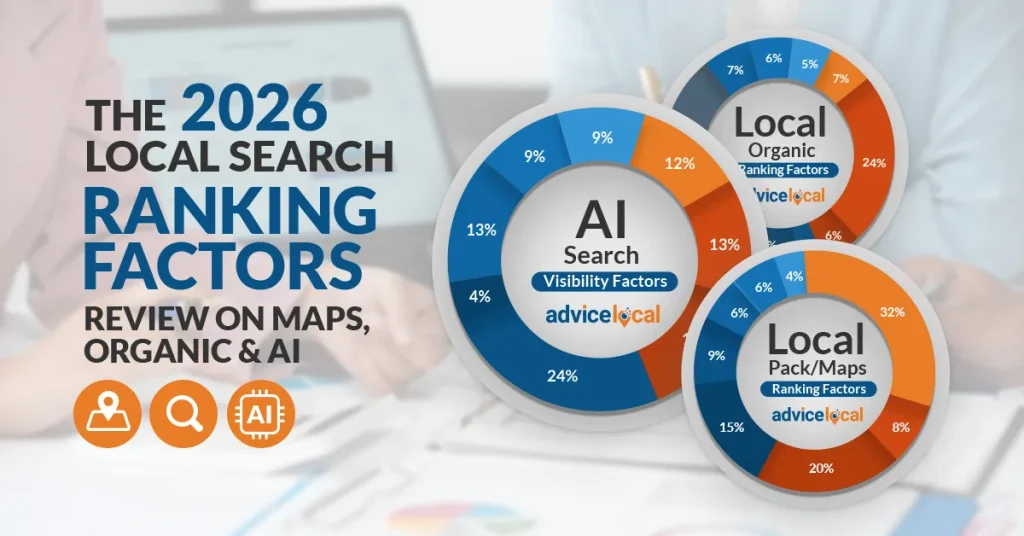
Why Local Ranking Factors Matter
Local search users often have strong buying intent.
People searching locally may want to:
- Schedule an appointment.
- Visit a business.
- Request a quote.
- Make a purchase.
- Contact a company.
- Compare nearby services.
Because of this intent, improving local rankings can lead to:
- Increased website traffic.
- More qualified leads.
- Higher conversion rates.
- Greater brand visibility.
- More customer inquiries.
- Increased revenue.
Businesses that understand local SEO ranking factors gain an advantage over competitors that rely solely on traditional marketing methods.
Relevance: Matching User Intent
One of the most important local ranking factors is relevance.
Search engines attempt to determine how closely a business matches the user’s search query.
For example:
- A search for “family dentist” requires different results than “cosmetic dentist.”
- A search for “emergency plumber” differs from “plumbing supplies.”
Businesses improve relevance by clearly describing:
- Their services.
- Their products.
- Their specialties.
- Their service areas.
- Their target audience.
The more accurately a business communicates what it offers, the easier it becomes for search engines to understand its relevance.
Distance: The Importance of Location
Distance is another major local ranking factor.
Search engines attempt to display businesses that are reasonably close to the user or the specified location.
For example:
- “pizza near me”
- “lawyer in Atlanta”
- “hotel downtown”
Search engines consider:
- User location.
- Search location.
- Business location.
- Service area.
Even if a business has strong authority, distance can influence whether it appears for certain searches.
This is why local businesses often focus on attracting customers within specific geographic areas.
Prominence: Building Authority and Trust
Prominence refers to how well known and established a business appears online.
Factors that contribute to prominence include:
- Brand recognition.
- Online mentions.
- Website authority.
- Customer engagement.
- Industry reputation.
Businesses with strong reputations often perform better in local search because search engines view them as trusted resources.
Prominence develops over time through consistent marketing efforts and customer satisfaction.
Website Optimization as a Local Ranking Factor
A business website remains one of the strongest local SEO assets.
Search engines analyze websites to understand:
- Services offered.
- Locations served.
- Content quality.
- User experience.
- Technical performance.
Important website elements include:
- Clear service pages.
- Location-specific content.
- Fast loading speeds.
- Mobile-friendly design.
- Easy navigation.
A well-optimized website supports higher local search visibility.
Content and Local SEO Rankings
Content helps search engines understand both expertise and relevance.
Businesses can improve local SEO by creating content about:
- Local services.
- Community topics.
- Industry questions.
- Customer concerns.
- Service areas.
Examples include:
- Home maintenance tips for local homeowners.
- Seasonal advice.
- Area-specific guides.
- Frequently asked questions.
Quality content builds authority while helping businesses rank for additional searches.
Mobile Experience and Local Ranking Factors
Most local searches now occur on mobile devices.
Users frequently search while:
- Traveling.
- Shopping.
- Working.
- Dining.
- Running errands.
Because of this, mobile usability has become an important local ranking factor.
Businesses should ensure:
- Fast page loading.
- Easy navigation.
- Clickable phone numbers.
- Simple contact forms.
- Responsive design.
Poor mobile experiences can reduce engagement and impact search visibility.
User Experience Signals
Search engines increasingly evaluate user behavior.
Important signals include:
- Time spent on a website.
- Bounce rates.
- Click-through rates.
- Repeat visits.
- Engagement.
If users quickly leave a website because they cannot find information, search engines may view the page as less valuable.
Strong user experiences encourage visitors to stay engaged.
Location Pages and Service Area Content
Businesses serving multiple locations often create dedicated pages for each service area.
These pages help search engines understand:
- Geographic coverage.
- Service availability.
- Local relevance.
Effective location pages include:
- Unique content.
- Local information.
- Relevant services.
- Customer needs.
- Helpful details.
Generic pages with duplicated content may provide limited value.
The Role of Search Intent
Local search intent plays a major role in rankings.
Searches can include:
Informational Intent
Users seek information.
Examples:
- how to choose a dentist
- roofing maintenance tips
Commercial Intent
Users compare options.
Examples:
- best attorneys near me
- top accountants in Dallas
Transactional Intent
Users want to act.
Examples:
- emergency plumber near me
- book dentist appointment
Understanding intent allows businesses to create content that aligns with user needs.
Building Local Authority
Authority is another important local ranking factor.
Businesses can strengthen authority by:
- Publishing useful content.
- Demonstrating expertise.
- Maintaining consistent branding.
- Providing valuable information.
- Building trust with customers.
Search engines prefer businesses that demonstrate experience and expertise within their industry.
Technical SEO and Local Rankings
Technical performance also contributes to local visibility.
Important areas include:
- Secure websites.
- Fast loading times.
- Mobile optimization.
- Proper indexing.
- Clean site structure.
Technical problems can limit a website’s ability to rank effectively.
Regular website maintenance helps ensure strong performance.
Common Local SEO Mistakes
Many businesses unintentionally hurt their local rankings.
Common mistakes include:
- Thin content.
- Poor mobile design.
- Slow websites.
- Generic service pages.
- Ignoring local keywords.
- Weak user experience.
Avoiding these issues can significantly improve local visibility.
How Local Ranking Factors Continue to Change
Search engines regularly update their algorithms.
Modern local SEO increasingly focuses on:
- User intent.
- Content quality.
- Relevance.
- User experience.
- Mobile usability.
Businesses that adapt to changing local ranking factors often maintain stronger search visibility.
Staying informed allows companies to remain competitive.
Measuring Success in Local SEO
Improving local rankings is only part of the goal.
Businesses should also measure:
- Website traffic.
- Lead generation.
- Customer inquiries.
- Conversion rates.
- Search visibility.
Monitoring performance helps identify which strategies are producing results.
Using Keyword Tracking to Understand Local Ranking Factors
Keyword tracking helps businesses monitor their visibility over time.
Tracking allows businesses to:
- Measure progress.
- Identify opportunities.
- Understand trends.
- Monitor competition.
- Evaluate SEO efforts.
Consistent keyword tracking transforms local SEO from guesswork into measurable performance.
How Rank Monitoring Improves Local SEO Decisions
Rank monitoring provides ongoing visibility into search performance.
Benefits include:
- Identifying ranking changes.
- Measuring campaign success.
- Discovering opportunities.
- Monitoring important keywords.
- Understanding market shifts.
Businesses that regularly monitor rankings can make faster and more informed decisions.
Using Analytics Reports to Measure Local SEO Growth
Analytics reports help business owners understand the impact of SEO efforts.
Reports can reveal:
- Traffic growth.
- Keyword performance.
- Ranking improvements.
- User engagement.
- Return on investment.
Clear reporting allows agencies and business owners to demonstrate measurable results.
Simplifying Growth Through Client Management
Agencies managing multiple businesses often face organizational challenges.
Easy client management allows teams to:
- Organize accounts.
- Monitor multiple campaigns.
- Access data quickly.
- Improve efficiency.
- Scale operations.
Streamlined management supports business growth without increasing complexity.
Why Local Ranking Factors Matter More Than Ever
Competition continues to increase in local search.
Businesses that understand local ranking factors can:
- Reach more customers.
- Improve visibility.
- Increase leads.
- Generate revenue.
- Strengthen their brands.
Success in local SEO comes from understanding both search behavior and performance data.
Conclusion: Understanding Local Ranking Factors Creates Better Results
Local search visibility depends on multiple factors working together. Relevance, distance, authority, content quality, user experience, and performance all influence local rankings.
However, understanding these factors is only the beginning.
Businesses need accurate keyword tracking, reliable rank monitoring, professional analytics reports, efficient client management, and flexible account management to turn local SEO data into meaningful business growth.
By monitoring performance and making data-driven decisions, businesses can improve visibility, attract more customers, and scale more effectively.
Understanding local ranking factors gives businesses the knowledge needed to compete. The next step is tracking performance and acting on real data.
With keyword tracking, rank monitoring, analytics reporting, easy client management, and flexible token top-ups, businesses and agencies can gain the clarity needed to grow.
Get started in seconds, monitor your most important keywords, and scale your local SEO efforts with a flexible token system designed to support your growth.