

Introduction
Ranking well in local search is rarely the result of one single action.
A business can have an excellent website and still struggle to appear prominently for important local searches. Another business may have a smaller website but maintain strong visibility because it sends clearer signals about its relevance, location, authority, and usefulness.
These differences are shaped by a range of local SEO ranking factors.
Understanding those factors gives businesses a better idea of what contributes to local search visibility. It also helps separate meaningful SEO work from tactics that may sound promising but have little long-term value.
Local search is particularly important because it connects businesses with people who are actively looking for nearby products and services. When someone searches for a restaurant, contractor, dentist, attorney, retailer, or other local business, they often have a specific need in mind.
Visibility therefore matters.
But visibility alone isn’t enough. The businesses that perform well in local search also need to demonstrate that they are relevant to the search, useful to customers, and connected to the area they serve.
There is no single checklist that guarantees a top position.
Instead, local SEO is influenced by several interconnected factors that work together to determine how well a business can compete.
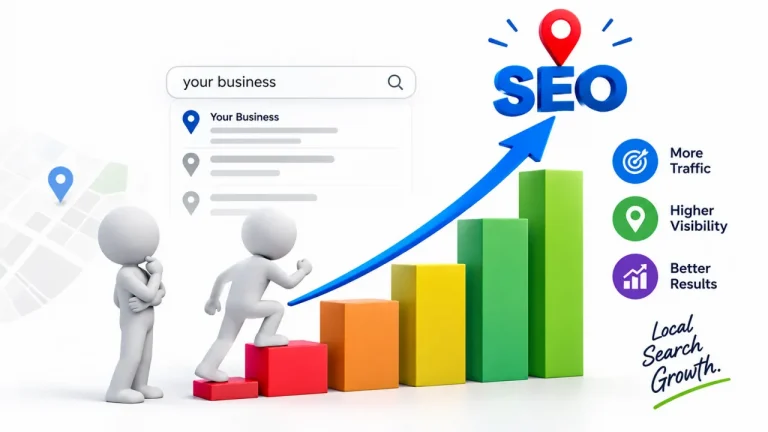
What Are Local SEO Ranking Factors?
Local SEO ranking factors are the signals and characteristics that can influence how prominently a business appears in local search results.
These factors can relate to:
- Relevance.
- Geographic proximity.
- Website quality.
- Content.
- Business information.
- Authority.
- User experience.
- Customer reputation.
- Search intent.
The importance of individual factors can vary depending on the search.
A person searching for an emergency service may receive very different results from someone researching a general question.
This is why local SEO should be viewed as a complete system rather than a collection of isolated tricks.
Relevance Is at the Center of Local Search
One of the most important concepts in local SEO is relevance.
Search engines need to determine whether a business is actually relevant to what someone is searching for.
For example, if someone searches for “commercial electrician,” a business specializing exclusively in residential landscaping isn’t relevant, regardless of how strong its website may be.
Businesses improve relevance by clearly communicating:
- What they offer.
- Which services they provide.
- Who they serve.
- Which topics they specialize in.
- Where they operate.
The clearer these signals are, the easier it becomes for search engines and customers to understand the business.
Search Intent Influences Relevance
Keywords don’t exist in isolation.
The reason someone searches can be just as important as the words they use.
Consider the difference between:
“How does roof repair work?”
and
“Roof repair company near me.”
The first search is primarily informational.
The second has much stronger commercial intent.
A useful local SEO strategy recognizes these differences and provides content that matches the purpose behind the search.
Geographic Relevance Matters
Local search is fundamentally connected to geography.
Someone looking for a coffee shop usually doesn’t want results from several states away.
Likewise, someone searching for an emergency plumber typically wants a business capable of serving their area quickly.
Geographic relevance helps search engines determine which businesses make sense for a particular search.
Businesses should clearly communicate the areas they genuinely serve while avoiding excessive or unnatural location targeting.
Distance Can Affect Local Visibility
The physical relationship between the searcher and a business can influence local search results.
This is particularly important for businesses that depend on customers visiting a physical location.
A searcher standing in one part of a city may see different local businesses than someone searching from another part of the same city.
This creates an important distinction between traditional organic SEO and local search.
A business may perform strongly for one geographic area while appearing less prominently in another.
Your Website Still Matters
Local businesses sometimes underestimate the importance of their website.
A website gives a business an opportunity to communicate its services, expertise, locations, and value in detail.
Important pages should make it immediately clear:
- What the business does.
- Who it serves.
- What services are available.
- Where those services are offered.
- How customers can get started.
A well-organized website creates a strong foundation for broader local SEO efforts.
Service Pages Are Important Local Assets
A generic page describing everything a business does may not provide enough detail.
Individual service pages allow businesses to explain their offerings in greater depth.
For example, a roofing company might have separate pages for:
- Roof repair.
- Roof replacement.
- Roof inspections.
- Storm damage repair.
- Commercial roofing.
Each page can focus on the specific customer need associated with that service.
This creates clearer topical relevance than trying to place every service on one page.
Content Quality Supports Local Visibility
Content can help businesses demonstrate knowledge and relevance.
However, publishing content simply to create more pages isn’t enough.
Strong content should answer genuine questions and provide useful information.
Consider topics such as:
- Common customer problems.
- Service-related questions.
- Maintenance advice.
- Industry explanations.
- Product comparisons.
- Local considerations.
Useful content can help a business become a resource rather than simply another company trying to sell something.
Topical Relevance Builds Depth
A business that consistently publishes useful information about its area of expertise can develop stronger topical depth.
For example, an HVAC company could create resources covering:
- Heating.
- Cooling.
- Maintenance.
- Energy efficiency.
- Indoor air quality.
- Seasonal preparation.
- Common equipment problems.
These subjects are closely connected.
Together, they create a much broader picture of the business’s expertise than a handful of generic articles.
Business Information Should Be Accurate
Accurate business information is essential for local search.
Customers need to know basic details such as:
- Business name.
- Address.
- Phone number.
- Hours.
- Services.
- Website.
If this information is inconsistent or outdated, it can create confusion.
Businesses should regularly review important information across their online presence and correct outdated details when necessary.
Online Authority Matters
Search engines need signals that help distinguish established, trusted businesses from unknown websites.
Authority can develop through genuine relationships, relevant mentions, useful content, and references from other websites.
For local businesses, relevant sources can be particularly valuable.
These might include:
- Local organizations.
- Industry associations.
- Community publications.
- Local businesses.
- Relevant professional websites.
The quality and relevance of relationships matter more than simply collecting large numbers of links.
Backlinks Can Support Authority
Links from other websites can provide additional signals about a business’s relevance and authority.
However, not all links are equally useful.
A link from a respected website relevant to your industry or community can be much more meaningful than a random link from an unrelated site.
The best link-building opportunities often come from genuine relationships and valuable contributions.
Customer Reputation Can Influence Visibility and Trust
Customers often use reviews and feedback when deciding which local business to choose.
A strong reputation can help establish trust with potential customers.
It can also reinforce the idea that a business is active and serving real customers.
Businesses should focus on delivering excellent experiences and encouraging genuine feedback rather than attempting to manipulate their reputation.
Authenticity matters.
User Experience Is Part of the Bigger Picture
Search visibility gets people to your website.
The website experience determines what happens next.
A confusing website can undermine otherwise strong SEO work.
Visitors should be able to:
- Find important information quickly.
- Navigate between pages easily.
- Understand services.
- Read content comfortably.
- Find contact details.
- Complete important actions without unnecessary friction.
SEO and user experience shouldn’t be treated as separate priorities.
They work together.
Mobile Experience Matters
Local searches frequently happen on smartphones.
Someone might search for a business while they’re:
- Shopping.
- Traveling.
- Working.
- Looking for directions.
- Dealing with an urgent problem.
Your website therefore needs to function well on smaller screens.
Pay attention to:
- Responsive layouts.
- Readable text.
- Tap-friendly buttons.
- Simple navigation.
- Easy-to-use forms.
- Fast-loading pages.
A poor mobile experience can cause visitors to abandon a website even if they found it through a relevant search.
Page Speed Can Affect Experience
Slow pages create friction.
People generally expect websites to respond quickly, particularly when they are searching from mobile devices.
Review large images, unnecessary scripts, and other technical elements that could slow your pages down.
A faster website doesn’t just support SEO.
It creates a better experience for customers.
Internal Linking Helps Connect Your Content
Internal links connect related pages on your website.
They can help visitors discover additional information while creating stronger relationships between topics.
For example, an article about roof maintenance could link to a roof inspection service page.
A guide about HVAC problems could link to a relevant repair service.
These connections make the website easier to navigate and create a more logical content structure.
Local Content Can Strengthen Geographic Relevance
Generic content can be useful, but local businesses can sometimes create additional value by addressing genuinely local topics.
Examples might include:
- Seasonal conditions.
- Regional customer concerns.
- Local regulations.
- Community events.
- Local industry trends.
The key is relevance.
A location should only be included when it adds something meaningful to the content.
Keyword Usage Should Be Natural
Keywords still matter because they help communicate what a page is about.
But modern SEO isn’t about repeating the same phrase as many times as possible.
Instead, use keywords naturally in:
- Titles.
- Headings.
- Body content.
- URLs.
- Relevant descriptions.
Include related terminology where appropriate.
The objective is to make the topic unmistakably clear without making the writing awkward.
Competitor Performance Provides Useful Context
Your local SEO performance doesn’t exist in a vacuum.
You are competing against other businesses for the same searchers.
Studying competitors can reveal:
- Topics they cover.
- Services they emphasize.
- Keywords they target.
- Content gaps.
- Website weaknesses.
- Opportunities they may have missed.
The purpose isn’t to copy competitors.
It is to understand the competitive environment and identify ways to provide something better.
Different Searches Can Produce Different Results
One of the most important things to understand about local search is that rankings aren’t always fixed.
A business may appear prominently for one search but lower for another.
Results can vary based on:
- Search terms.
- Search intent.
- Location.
- Competition.
- Relevance.
- Service category.
This means businesses shouldn’t assume that one ranking position represents their entire local search performance.
Local SEO Is a Long-Term Process
There is rarely a single change that transforms a business’s local search presence overnight.
Strong local SEO usually develops through repeated improvements.
Businesses may gradually:
- Create better pages.
- Improve existing content.
- Expand useful resources.
- Strengthen authority.
- Improve their website.
- Address customer questions.
- Monitor performance.
Over time, these improvements can create a stronger overall search presence.
The Most Important Local SEO Ranking Factors Work Together
It is tempting to search for the one factor that matters most.
But local SEO is more complicated than that.
Relevance without a useful website isn’t enough.
A strong website without local relevance may struggle to compete for geographically specific searches.
Excellent content without authority may take longer to gain visibility.
Strong rankings without a good customer experience may produce disappointing business results.
The strongest approach considers the entire ecosystem.
Common Misunderstandings About Local SEO Ranking Factors
There Is One Magic Ranking Factor
There isn’t.
Local search visibility comes from multiple signals working together.
More Keywords Always Mean Better Rankings
Keyword stuffing can make content worse rather than better.
More Content Is Always Better
Content should have a purpose and provide value.
More Links Automatically Mean More Authority
Quality and relevance matter.
Rankings Are Permanent
Search results change as competitors, search behavior, and other factors change.
SEO Is Finished Once a Website Is Optimized
Search visibility requires ongoing attention.
A Balanced View of Local SEO
The strongest local SEO strategies tend to balance several priorities.
Relevance
Make it clear what your business offers.
Local Context
Communicate where you genuinely operate.
Content
Provide useful information that answers customer questions.
Authority
Build genuine relationships and earn relevant recognition.
Experience
Make your website easy and pleasant to use.
Measurement
Track performance and use data to guide future decisions.
No single area should exist completely on its own.
Together, they create a stronger foundation.
Frequently Asked Questions
What are the most important local SEO ranking factors?
Important factors include relevance, geographic context, website quality, useful content, authority, accurate business information, and overall user experience.
Does location affect local search rankings?
Yes. Geographic proximity can influence local results, particularly for searches involving physical businesses and nearby services.
Does website content matter for local SEO?
Yes. Useful, relevant content helps communicate a business’s services, expertise, and relevance to searchers.
Are reviews important for local businesses?
Customer feedback can influence trust and reputation. Businesses should focus on providing excellent experiences and earning genuine feedback.
Do backlinks matter for local SEO?
Relevant, authoritative links can contribute to a website’s broader authority. Quality and relevance are more important than simply accumulating links.
Conclusion
There is no single formula that guarantees success in local search.
Instead, local SEO ranking factors work together to create a broader picture of relevance, authority, geographic connection, and usefulness.
Businesses that want to improve their local visibility should focus on the fundamentals.
Make services clear.
Create genuinely useful content.
Build a website that customers can navigate easily.
Keep business information accurate.
Develop legitimate authority.
Understand customer intent.
Pay attention to the areas where competitors are stronger.
Most importantly, treat local SEO as an ongoing investment rather than a one-time project.
Search behavior changes. Competitors improve. Businesses expand their services. Customer expectations evolve.
A strategy that can adapt to those changes is much more valuable than one built around a single tactic.
The real goal isn’t simply to achieve a higher position in search results.
It’s to build a stronger online presence that helps the right customers discover your business, understand what you offer, and feel confident taking the next step.
Knowing the factors that influence local search is useful, but measuring your actual performance gives you a much clearer picture of where your strategy stands.
Rankscout brings together Keyword Tracking, Rank Monitoring, and Analytics to help businesses understand search performance and make more informed SEO decisions.
Start using Rankscout today and turn local search data into a clearer path toward better visibility and long-term growth.