

Introduction
In the competitive landscape of digital marketing, broad strategies often fail to deliver the specific results small and medium-sized businesses require. While national keywords offer immense traffic potential, the conversion rates are often lower. Local SEO focuses on capturing the valuable share of voice within a specific geographic area. For businesses to succeed, they must understand not just how to rank, but how to identify the right terms to begin with. This process involves more than guessing what neighbors might type into a search bar. It requires analyzing the search volume for local keywords to build a strategy that connects business needs with user intent.
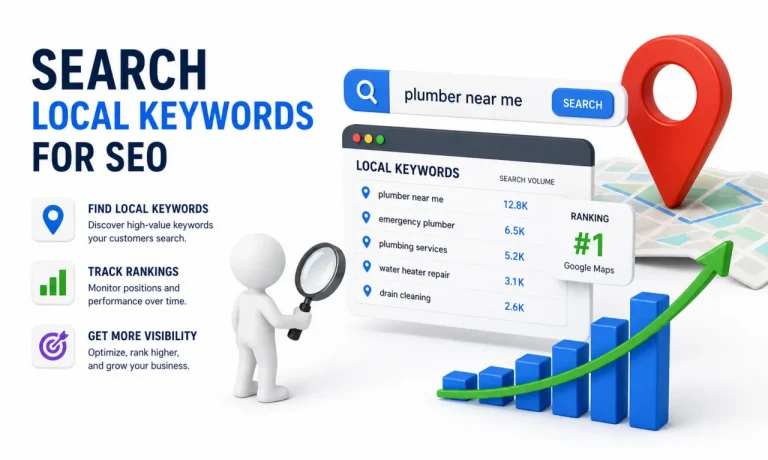
When you search for a specific service with a location attached, such as “plumber near me” or “bakery in downtown Chicago,” you are engaging with local search intent. Understanding these specific queries allows you to target the customers who are most likely to convert. However, this requires a shift from global assumptions to localized data. By utilizing the right tools and analytical methods, you can pinpoint exactly which terms matter most to your community. This guide will walk you through the logical steps to find and validate local keywords using data that drives real growth.
Understanding Local Search Intent
Before diving into the data, it is crucial to recognize the nature of local queries. Local search intent is driven by immediacy and proximity. Users who enter these searches often have a higher likelihood of visiting your physical location or contacting your business. Unlike general users who might be in the research phase, local searchers are frequently in the decision-making phase. This means your keyword strategy should prioritize terms that signal readiness to act.
You might look for terms that indicate a transactional intent. For a retail store, this could include “buy,” “open now,” or “prices.” For a service provider, it might be “how to fix” or “emergency services.” Identifying these nuances ensures that when you begin searching for keywords, you are finding terms that align with your ultimate business goals. It is not just about volume; it is about the quality of the traffic you are bringing to your site.
Gathering Data for Local Terms
One of the most common mistakes in SEO is relying solely on global data. A keyword might have high volume nationally, but zero volume in your specific service area. To avoid this, you must use research methods that filter down to the local level. While there are many tools available, the core goal is to find terms where your business can realistically compete.
When you analyze the search volume for local keywords, you are essentially measuring the demand against the competition. The goal is to find a balance where the search volume is high enough to be viable but the competition is low enough to allow for ranking. This is particularly true for a new website or a business with limited marketing budget. By focusing on these specific areas, you can gain a foothold in search engine results pages and build authority over time. It is a process of elimination and refinement.
The Role of Analytics in Validation
Finding a keyword is only half the battle. The real value comes from monitoring that keyword over time. Once you have selected your local focus, you need to see if your website is actually being found. This is where keyword tracking and analytical reports become essential. You cannot rely on manual Google searches to determine your true position, especially when Google algorithms update frequently.
Analytics reports provide a clear picture of your progress. They allow you to visualize growth and identify when a specific keyword might be slipping. If you notice a trend downward, you can investigate why it might be happening. Was there a change in the code? Did a competitor increase their budget? With analytical tools, you get the transparency required to make informed decisions rather than reacting to guesswork.
Implementing Rank Monitoring Systems
To maintain a competitive edge, you must implement a system for continuous rank monitoring. This involves setting up a schedule to check where you stand for your targeted local keywords. The data should be consistent and reliable so that you can trust the numbers you are looking at. With automated rank position updates, you do not have to rely on memory or sporadic checks.
Frequency is a key factor here. Daily rank tracking tools offer a significant advantage because search rankings can shift rapidly. Catching these fluctuations early gives you time to adapt your content or technical settings before significant traffic loss occurs. Whether you are tracking a single location or multiple cities, the ability to see this data in real time is invaluable. It transforms SEO from a passive activity into an active management process where visibility is controlled and optimized.
Scaling Your Efforts with Client Management
For agency owners or business owners managing multiple locations, the challenge shifts to scale. You need a system that allows you to oversee performance across various areas without losing details. Effective client management features in modern tracking platforms allow you to organize accounts within a single dashboard. This streamlines the workflow and ensures that you never lose sight of a location.
Conclusion
Ultimately, mastering your SEO strategy is less about guessing and more about knowing the exact data that drives results. Precise Local Keyword Tracking allows you to understand your market, while Rank Monitoring gives you real-time visibility into your standing. With professional Analytics Reports, you can clearly visualize growth and prove the value you deliver to stakeholders.
Scaling your business doesn’t require extra headaches. Our Easy Client Management tools keep your agency workflow streamlined, while our Flexible Token System ensures you manage costs effectively. You can apply promo codes for discounts or simply add tokens for extra tracking whenever you need to expand your reach. We make it simple to scale without compromise.
Ready to transform your performance tracking? Start your free trial of Rankscout today. You can get started in seconds and see the dashboard immediately. Top up your tokens easily to unlock advanced features. Don’t just track your rankings—own your market with the clarity and power of the Rankscout platform.