

How to Get Your Business Listed on Local Search Engines
In the modern digital ecosystem, simply existing on the internet is no longer sufficient for business survival. For local enterprises, the stakes are incredibly high. If a customer needs a service within your town on a rainy Tuesday, they will open a search engine and expect to find a solution instantly. The digital world has shifted from passive brochures to active marketplaces, where search engines determine who gets invited to play. To participate in this marketplace, you must ensure your business is not just connected, but confident and visible to the search algorithms. This requires a comprehensive understanding of how your digital footprint is perceived and managed.
Many business owners believe that getting a name on a map profile is a one-time task. Once the data is uploaded, they believe the work is done. However, the validation of that data requires continuous oversight. Without the ability to verify how your business appears to a search engine, you cannot truly claim you are “listed” or “found.” To get your business listed on local search engines effectively, you must rely on a system that monitors your performance. You need tools that transform uncertainty into certainty, replacing the “black box” of search algorithms with transparent data.
This guide outlines the operational framework for securing your digital presence. We will explore how to leverage data-driven tools to manage your account, track your visibility, and prove the value of your position. Getting your business listed is not just about claiming a page; it is about managing data that ensures that page remains authoritative and prominent. By utilizing features like Keyword Tracking, Rank Monitoring, and professional analytics, you can ensure that your business is not only present but fully recognized.
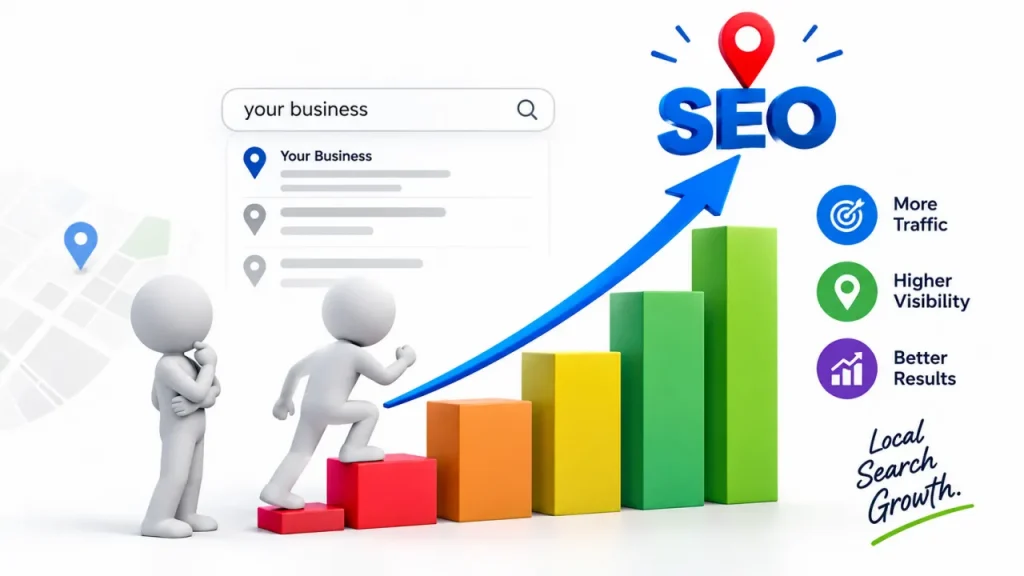
Maximizing Visibility: The Foundation of a Local Search Listing
To get your business listed on local search engines, you must prioritize data accuracy. The first step in a successful listing strategy is understanding how keywords influence your listing status. You cannot be found if you do not speak the language of your target customer. Search engines rely on specific terms to associate a business with a geographic area. By using Keyword Tracking, you can identify the specific phrases that are driving visibility in your region. This allows you to ensure your business is being associated with the correct terms that matter to your customers.
Many listings fail because they use generic language that does not capture the local intent. If your market searches for “emergency plumbing” while your listing claims “plumber services,” the system may not prioritize you. By monitoring specific search terms to see how they perform over time, you gain a clear picture of how your local search listing is being indexed. This precision is vital for standing out in a saturated market. You are not just trying to be listed; you are trying to be listed as what your customers are looking for.
Strategic Keyword Alignment:
- Identify Intent: Use tracking tools to find terms with high purchase intent in your area.
- Match Metadata: Ensure your website tags reflect these high-value search terms.
- Regular Updates: Monitor if your performance dips and update your keyword strategy accordingly.
By integrating effective Keyword Tracking into your initial setup, you ensure that your local search listing is anchored to the reality of user behavior. This creates a strong foundation that makes it easier for search engines to validate your presence when other signals are present.
Precision Tracking for Your Local Search Listing
Once your data is accurate, you need a way to verify that the accuracy is being maintained. Search engine algorithms are dynamic. A website can accidentally trigger a penalty, or a competitor can technically manipulate their data structure. Without operational oversight, your local search listing can drift downward in performance. This is where real-time monitoring becomes critical. You need a system that tracks where a business or client stands in search results instantly. This feature provides the visibility required to confirm that your local search listing is functioning as expected.
Proactivity is the key to stability. When you rely on periodic snapshots of data, you are essentially backward-thinking. You do not know what is happening until it has already occurred. Real-time monitoring allows you to detect immediate changes in performance. For example, if your visibility for a primary keyword drops, you can investigate if it is due to a technical hiccup, a server error, or a change in the listing data. This ability to intervene quickly prevents small issues from becoming major setbacks to your online reputation.
Benefits of Real-Time Tracking:
- Immediate Alerts: Receive notifications the moment data fluctuates.
- Visibility Protection: Maintain high rankings by catching drops early.
- Performance Insights: Understand exactly which data points are impacting your standing.
By maintaining constant visibility into your local search listing, you eliminate the anxiety of the “black box.” You manage your digital assets with the precision of a professional operation. This ensures that your market presence remains secure and reliable, providing peace of mind to business owners who depend on a steady flow of online visibility.
Using Analytics Reports for Verified Local Search Listing Data
Beyond tracking future positions, you must validate the performance of your current presence. Clients and stakeholders need to know that the investment in securing your local search listing is generating value. Professional analytics reports transform raw numbers into actionable business intelligence. These reports track performance over time and visualize the growth of your visibility. When you can show a direct correlation between your digital presence and business growth, you validate your strategy.
Analytics reports should not just be a static list of numbers. They should tell a story. They should show growth in traffic, increases in visibility, and improvements in engagement. When you analyze your data, you should look for spikes or drops that coincide with specific actions. Did a recent update improve your standing? Did a seasonal shift decrease it? Understanding the “why” behind the data helps you refine your strategy. This connection is essential for securing the longevity of your local search listing.
Key Metrics for Reporting:
- Traffic Growth: Show how many more eyes are seeing your business online.
- Performance Trends: Visualize the upward trajectory of your search visibility.
- Value Breakdown: Demonstrate how the local search listing contributes to revenue.
By presenting these insights clearly, you secure the confidence of your team and stakeholders. You transform local search listing management from a technical chore into a strategic business asset. This transparency ensures that all parties understand the value of the effort being put into maintaining your digital footprint.
Reliable Client Management for Multiple Local Search Listing Accounts
As you manage multiple locations or agency clients, scale becomes a challenge. If you are manually tracking every piece of data for every account, you risk losing data or making errors. A streamlined dashboard for managing multiple business accounts or clients in one place is essential for growth. This tool ensures that your local search listing for one client does not compromise the performance of another.
Effective management allows you to view all accounts from a single perspective. You can assess the health of your entire portfolio in minutes. If a client’s local search listing needs immediate attention, you can see the risk indicators on your dashboard without hunting through separate folders. This efficiency prevents administrative overwhelm, allowing your team to focus on strategy. It also ensures that every client receives the same standard of excellence and attention, regardless of the account’s age or size.
Management Best Practices:
- Unified Dashboards: View all client data in one screen.
- Role-Based Access: Ensure team members have the right permissions for each account.
- Workload Balancing: Distribute tasks efficiently across your team.
This structure is vital for agencies and owners alike. It allows you to scale your operations without adding significant overhead. You can take on more clients or more locations while maintaining the quality of your local search listing management. This scalability ensures that your business can grow alongside your clients.
Flexible Growth with Token Systems for Local Search Listing Needs
Finally, you must be prepared for budget changes and seasonal demands. Business growth is rarely linear. You may find in the second quarter that your local search listing data requires expansion to cover new markets. A flexible token-based system allows you to adjust your resources instantly. You can quickly upgrade your account to include more locations or more detailed tracking. This means you are not locked into a rigid contract that stifles your growth.
For business owners, this flexibility reduces financial risk. You only pay for the capacity you utilize. If you need to scale up your discovery process to cover multiple local search listing requirements, a token top-up allows you to do so instantly. Promo codes further enhance this control, allowing you to streamline your initial setup or reward loyalty. You are not bound by complex billing cycles. You can adapt your financials to match your business goals seamlessly.
Token System Advantages:
- Instant Expansion: Add more locations or services on demand.
- Budget Control: Scale up or down based on seasonal needs.
- Simple Management: Streamline your set up with promo codes.
When you combine these flexible tools with your tracking and management system, you create a robust ecosystem for success. This ecosystem supports the local search listing process by ensuring that the infrastructure is always ready to support your growth. It allows you to focus on the business, knowing the technical side is scalable and responsiv
Summary of Strategic Actions for Listing Success
Getting your business listed on local search engines is a journey of precision and consistency. It is about more than just a static directory entry; it is about active management. You have the opportunity to turn your digital presence into a high-performing asset through the right tools. You must integrate Keyword Tracking to match user intent. You must utilize Rank Monitoring to maintain real-time visibility. You need Analytics Reports to prove value. You require Client Management to handle scale. And you benefit from Tokens to remain flexible.
By prioritizing these tools, you bridge the gap between “being found” and “being chosen.” You reduce the friction between your business and your customer. You demonstrate to search engines that you are active, relevant, and trustworthy. You replace assumptions with data. You ensure that every dollar invested in your digital strategy drives results.
Final Checklist for Your Strategy:
- Adopt Data Precision: Use tracking tools to refine your keywords.
- Monitor Continuously: Keep an eye on your rankings in real-time.
- Scale Selectively: Use cards and management tools to grow safely.
Conclusion: Taking Control of Your Local Presence
The journey to appearing on local search engines is a competitive marathon. It requires a mix of technical skill, operational discipline, and strategic foresight. However, the path to success is not a secret; it is a matter of implementation. When you prioritize tools that give you real-time visibility and professional reporting, the results speak for themselves. Clarity comes when data replaces assumptions. Scalability appears when workflows are streamlined.
Your business deserves to be the first option seen. You are not leaving your visibility to chance. You are building a system that ensures your local search listing is robust, verified, and ready to capture market share. By utilizing features like keyword tracking, rank monitoring, and flexible management, you ensure that your business is visible to the local customers who need you most.
You have the roadmap now. You understand the power of professional tracking, the need for management scalability, and the advantage of a flexible budget system. You know that local search listing success is driven by data. Stop relying on old methods and start managing your digital footprint with precision.
Take action today. Schedule your account with a system that offers flexible plans and allows you to scale instantly. You can easily manage your account and apply promo codes to streamline your initial set up. Token Top-Ups allow you to scale your discovery process instantly to cover multiple locations or brands.
Start managing your visibility now. Schedule your account today and experience the difference that data-driven insights make for your business’s bottom line. Get started in seconds.