

How Local Directories Affect Search Rankings: The Essential Role of Keyword Tracking
In today’s digital age, consumers rely on search engines and online directories to find local businesses at the exact moment they’re ready to make a purchase. For small businesses and agencies alike, understanding the relationship between local directories and search rankings is paramount for online success. But as you navigate the world of SEO and reputation management, you’ll quickly discover a powerful thread connecting everything: precise keyword tracking.
Whether you’re an agency managing dozens of client listings or a business owner focused on getting ahead of nearby competitors, one fact remains true—a solid strategy using accurate keyword tracking can mean the difference between leading the pack and falling behind. In this comprehensive guide, we’ll uncover the dynamic influence local directories have on search visibility and show you why keyword tracking is your North Star for long-term, measurable SEO growth.
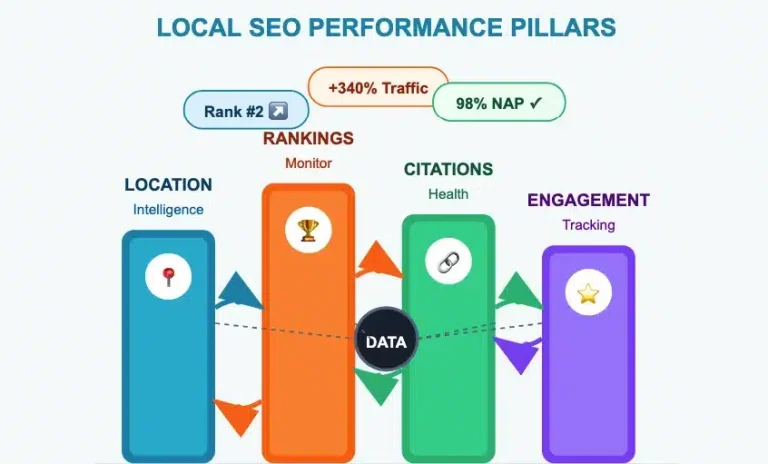
Introduction: Local Directories, Search Rankings, and the Missing Link—Keyword Tracking
Search engines exist to answer questions, and when those questions are about local businesses (“best plumber near me,” “coffee shop open late,” or “SEO agency in Denver”), Google and Bing turn to a wealth of local directory data. Directories such as Yelp, Yellow Pages, and industry-specific platforms don’t simply drive traffic from their own users—they also inform search algorithms about which companies deserve top placement. But how do you know if your business is actually benefiting from these listings? This is where keyword tracking comes in.
Most businesses list themselves on directories and hope for the best. But without keyword tracking, there’s no scientific way to measure if directory listings are truly moving the needle on your local search rankings. The ability to monitor your positions for relevant search terms across time, analyze impact, and act quickly based on this data gives you the competitive edge in today’s crowded marketplace.
Understanding Local Directories and Their Search Engine Power
Local directories aren’t just old-fashioned “phone books” gone digital—they are dynamic sources of business data that search engines consult daily.
Why Local Directories Matter
- Reputation Signals: Consistent information across directories builds trust with both consumers and search engines.
- Structured Data: Directories supply search engines with up-to-date details (hours, contact info, services) that reinforce local relevance.
- Backlink Authority: Many directories provide high-authority backlinks, further boosting your domain’s SEO value.
But the real question is: how much are these directory placements really enhancing your visibility? To answer this, you must employ keyword tracking to monitor organic search progress over time.
Directories and Citation Consistency
Citation consistency—ensuring your business name, address, and phone number are uniform across all directories—is known to impact your search ranking. Google, in particular, prizes accurate, widespread citations as a key ranking factor for local queries. But if you add or update directory listings, how do you know when (or if) these changes are reflected in improved search positions?
This is where keyword tracking technology is indispensable. By monitoring the search terms that matter, you can tie changes in citations to meaningful shifts in your rankings
Authority Links Backed by Directories
Many local directories have solid domain authority, translating into strong backlink potential. Because Google trusts these sources, even a handful of well-placed directory listings can boost your standing—if you’re tracking the right keywords.
Keyword tracking empowers you to measure how specific new or improved directory links influence your ranking for relevant local searches, so you can double down on the directories delivering the biggest bang for your SEO buck.
The Hidden Risks: Outdated or Inconsistent Listings
It’s not uncommon for businesses to have incomplete, inconsistent, or even duplicate directory listings. When left unchecked, these inconsistencies can actually harm your local search rankings rather than improve them.
- Outdated Information: Clients searching for a new phone number or location won’t find you—or worse, find inaccurate details.
- Duplicate Listings: Search engines get confused by multiple entries, diluting ranking signals.
- Mismatches: Minor differences (like “Street” vs. “St.”) across listings can lower citation consistency scores.
With ongoing keyword tracking, you can swiftly detect when something is off by watching for sudden drops in targeted keyword rankings after directory changes. This early warning allows you to investigate and correct issues before they escalate.
What Is Keyword Tracking?
Keyword tracking is the process of monitoring your position in search results for chosen keywords over time. Unlike vanity metrics or guesswork, it offers clear, actionable data about what’s working and what needs adjusting. For local SEO, it means:
- Tracking search terms specific to your target geography (e.g., “best taco truck Austin”).
- Receiving updates when rankings rise, fall, or fluctuate.
- Connecting changes in directories to real movement in search results.
When you update or add a directory listing, keyword tracking tells you if your efforts are translating into higher visibility for priority keywords. This closed feedback loop is invaluable for business owners and agencies determined to maximize ROI.
How Keyword Tracking Guides Your Strategy
By using keyword tracking to correlate directory updates with ranking movements, you can:
- Identify which directories are most influential for your niche or market.
- Pinpoint the exact impact of each citation or backlink.
- Avoid wasted effort on directories that have little or no measurable effect.
- Plan your next steps based on empirical, not anecdotal, data.
Implementing Keyword Tracking for Local Directory Optimization
Let’s walk through how a modern agency or growth-focused business would use keyword tracking to monitor the performance of directory placements.
1. Identify High-Value Local Keywords
Choose keywords that closely reflect your business’s offerings and the way customers search locally (“emergency dentist downtown Chicago” vs. simply “dentist”). A blend of high-volume, high-intent, and long-tail keywords ensures coverage across multiple search scenarios.
2. Establish a Keyword Tracking System
Use a platform that allows you to:
- Add and group keywords by campaign, location, or directory initiative.
- Set update frequencies for real-time results.
- Compare rankings by day, week, and month to spot patterns and opportunities.
3. Benchmark Your Starting Position
Before updating any directory, use keyword tracking to establish your baseline. This gives you a before-and-after view to clearly measure impact.
4. Update and Expand Directory Listings
Tackle core listings (Google, Yelp, Bing, Facebook) first, then move to niche directories relevant to your industry. Ensure information is both complete and consistent across all platforms.
5. Monitor Ranking Changes with Keyword Tracking
After implementing changes, use your keyword tracking dashboard to:
- Watch for improvements in target keyword rankings.
- Investigate any drops and swiftly correct directory errors.
- Track the timeline between directory adjustments and ranking changes.
6. Report Results with Analytics
Combine keyword tracking data with professional analytics reports to clearly showcase progress to stakeholders and clients. Demonstrate how specific directory enhancements result in measurable SEO gains.
Scaling Your Local SEO: The Power of Keyword Tracking for Agencies
Agencies managing multiple clients or multi-location businesses face unique complexities. Precision keyword tracking becomes mission-critical for:
- Managing Client Expectations: Transparent, data-driven reports tie directory actions to real SEO improvements.
- Resource Allocation: Focus your time on actions and directories that move the needle, rather than on tasks with little return.
- Client Retention: Ongoing keyword tracking shows tangible ROI, making clients more likely to renew and expand services.
A streamlined dashboard and scalable keyword tracking system let you oversee dozens of businesses from a single interface, simplifying operations and accelerating growth.
Budgeting and Scaling with Keyword Tracking
Local SEO campaigns rarely follow a one-size-fits-all approach. The ability to flexibly scale your keyword tracking as you expand—whether by location, service, or volume of tracked keywords—is a key advantage.
Modern platforms offer token-based systems and promo codes, allowing you to ramp up or down based on active campaigns, seasonal promotions, or client additions. This ensures you only pay for what you need and can extend or enhance tracking efforts as your client base grows.
Key Takeaways: Why Keyword Tracking Is Your Directory Success Multiplier
- Quantifies Results: Links directory optimizations to ranking improvements with pinpoint accuracy.
- Detects Issues Early: Flags sudden drops or inconsistencies for fast intervention.
- Enhances Reporting: Converts raw data into clear, client-ready analytics.
- Enables Scalability: Supports multi-client management with flexible growth tools.
- Maximizes ROI: Ensures every directory update is purposeful and measured.
No other metric offers such clarity and actionable intelligence on the true ROI of your local directory efforts.
Conclusion: Make Local Directories Work for You with Smart Keyword Tracking
Local directories wield tremendous power in shaping your search rankings, but only when they are built, managed, and tracked with precision. Relying on guesswork, periodic audits, or vanity metrics will leave you vulnerable to shifts in algorithm changes and competitor advances.
Keyword tracking is the anchor of a winning SEO strategy. It connects every update you make to your directories with measurable movement in your local search performance. Whether you’re reporting results, debugging discrepancies, or scaling your reach, keyword tracking provides the high-definition lens you need to succeed.
Don’t let your directory efforts go unmeasured. Start a modern, scalable keyword tracking system today, and discover exactly which actions drive your business forward. Get started in seconds, leverage token top-ups for flexible scaling, and see how precise keyword tracking brings clarity and growth to your local SEO strategy.