

Do Google Reviews Affect Local Search Rankings? The Critical Role of Rank Monitoring
Google reviews shape the way customers find, trust, and select local businesses. But beyond influencing consumer behavior, there’s a pressing question for agency owners and business operators: Do Google reviews affect local search rankings? And, equally important, how can you measure the real impact of reviews on your own local SEO efforts? The answer lies in marrying reputation-building with data-driven strategies—most notably, rank monitoring.
In a market where local visibility can make or break a business, understanding the connection between reviews, search rankings, and actionable monitoring is essential. This comprehensive guide will unpack how Google reviews contribute to your local SEO performance, why ongoing rank monitoring is indispensable, and how you can leverage analytics, keyword tracking, and smart client management to not just compete, but win.
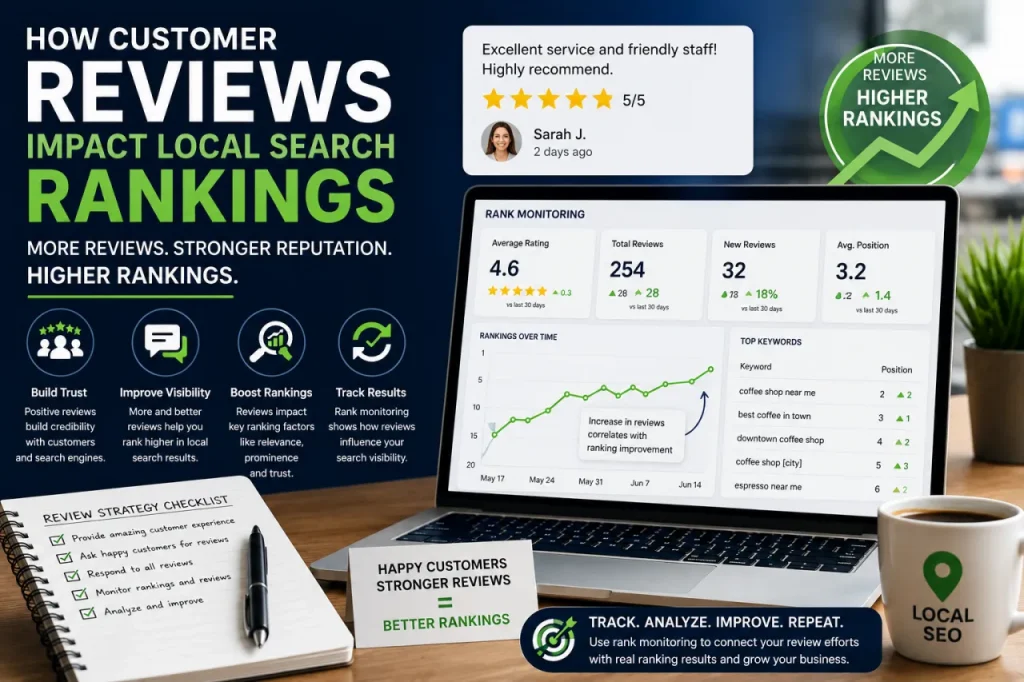
Introduction: Google Reviews, Local Search, and Rank Monitoring
Most business owners intuitively understand that positive reviews attract more customers. 90% of consumers read online reviews before visiting a business, and even a marginal increase in your average rating can directly boost conversion rates. But the subtle mechanics of Google’s local search algorithm are often misunderstood. Reviews don’t just influence consumer choice—they play a measurable role in how prominently Google displays your business in local results.
However, improving your review profile without measuring its direct effect is like rowing without a compass. Are those five new stellar reviews moving you up a spot? Is that one negative review dragging you down? Can you tie a new review strategy to actual search visibility over time? The only way to answer these questions is with vigilant rank monitoring—tracking movements in your search positions for the keywords that matter most after any change in your review profile.
Let’s explore how reviews and rank monitoring work together to help you dominate your local market.
The "Prominence" Factor in Google’s Local Searc
Google’s local search algorithm is built on three pillars: relevance, distance, and prominence. While the first two are relatively fixed (focusing on your business type and proximity to the searcher), prominence is where reviews come into play.
Prominence is Google’s algorithmic score for a business’s reputation and popularity, both online and offline. Here’s how Google describes it:
“Prominence refers to how well known a business is. Search engine results try to reflect this in local ranking. Some places are more prominent in the offline world, and search results try to reflect this in local ranking as well.”
Reviews—both in quantity and quality—are key signals Google uses to determine this prominence.
Correlation Between Review Signals and Search Placement
Studies consistently show a positive relationship between high review counts, strong average ratings, and elevated positions in “local pack” and map results. Businesses with more reviews and better ratings generally appear higher than rivals with fewer, less favorable reviews.
But there’s more to it than sheer volume:
- Review Velocity: How frequently are you receiving new reviews?
- Review Diversity: Are your reviews spread across different platforms, or concentrated only on Google?
- Review Keywords: Do your reviews naturally reference important products, services, or locations (helping keyword relevance)?
- Owner Responses: Do you actively engage with your reviewers? Google values responsiveness.
Yet, how do you know these review activities are actually changing your local rankings? That’s the job for rank monitoring.
Connecting Reputation to Real SEO Results
Without rank monitoring, there’s no scientific way to measure whether a surge (or drop) in reviews has a direct impact on your search visibility. It’s not enough to gather five-star praise—you need to observe what happens to your rankings in the days and weeks after each review milestone.
By implementing a robust rank monitoring system, you can:
- Track Keyword Movement: See if new positive reviews cause upward shifts for your most important local search phrases (e.g., “best pizza in Philadelphia”).
- Spot Patterns: Notice if negative reviews or lack of recent feedback coincide with ranking drops.
- Guide Review Requests: Focus on requesting reviews that contain relevant keywords or locations.
- Validate Initiatives: Tie your outreach campaigns—like incentives for leaving a review—to actual, quantifiable changes in local pack or map rankings.
The Power of Data-Driven Adjustments
Leveraging rank monitoring allows you to approach local SEO proactively. Instead of guessing, you make decisions based on evidence:
- If a review campaign isn’t improving visibility, you can pivot to other tactics.
- If certain keywords are rising in tandem with glowing reviews, you double down on those terms.
All of this reduces wasted effort and maximizes your SEO investment.
Implementing Rank Monitoring for Local Businesses and Agencies
Building a successful review and ranking strategy requires more than manually checking search results every few days. Modern rank monitoring platforms offer:
- Keyword Tracking: Monitor specific local terms (e.g., “car repair Miami”, “family dentist Seattle”) for ranking changes.
- Real-time Alerts: Instantly know when your position shifts (up or down), so you can react early.
- Analytics & Reporting: Automated, visual reports to prove ROI to clients or stakeholders.
- Scalable Client Management: Ability to oversee dozens of businesses or locations from a single dashboard.
- Token-Based Flexibility: Scale up or down based on campaign intensity, budgeting tokens for focused monitoring during review pushes.
By using these tools, agencies and business owners make local SEO data actionable, ensuring reputation and review-building campaigns translate into measurable ranking improvements.
How to Align Google Review Generation with Rank Monitoring
Here’s a step-by-step approach for tying your review acquisition to continuous SEO progress through rank monitoring:
1. Identify High-Impact Keywords
Start by choosing the search queries that bring the most value—these might be related to your highest revenue services, busiest locations, or specific attributes (“24-hour plumbing Denver”).
2. Establish Baseline Rankings
Set up your rank monitoring tool to get an initial measurement of your current position for each priority keyword. This becomes your reference point.
3. Launch Review Acquisition Campaigns
Encourage recent customers to leave honest feedback, emphasizing the value of their reviews for your business’s visibility. Provide simple links, QR codes, or automated prompts after service.
4. Monitor Ranking Changes
As reviews start to accumulate, use your rank monitoring dashboard to watch for changes in your target keyword positions. Are you appearing more frequently in the top three local results? Is your map presence more consistent?
5. Analyze Correlation
Note any significant ranking jumps or declines and cross-reference the timelines with your review campaigns. Strong movements following bursts of review activity indicate a healthy connection.
6. Adjust Strategy Based on Evidence
If rankings improve, refine and continue your campaign. If there’s no change, consider requesting reviews that cover different services or locations—or focus on increasing review velocity.
The Agency Advantage: Analytics, Reporting, and Scale
For agencies managing multiple clients or business owners with several locations, organization and reporting are king. Modern rank monitoring platforms let you:
- Centralize All Accounts: Oversee review performance and rankings for dozens of businesses via one dashboard.
- Automate Analytics: Generate professional, shareable reports that link review milestones to ranking improvements.
- Streamline Operations: Use token-based top-ups to allocate resources where demand or opportunity is highest.
- Retain Clients: Show tangible ROI by connecting your review management services directly to better search visibility.
In a competitive agency world, these capabilities help you stand out, keeping clients engaged and satisfied.
Addressing Common Roadblocks: Misconceptions and Best Practices
Misconception 1: More Reviews = Guaranteed #1 Rankings
While volume is important, it’s only one factor. Reviews must be recent, relevant, and ideally mention your target keywords or locations. Rank monitoring helps you see when a certain review threshold triggers visible ranking movement.
Misconception 2: Negative Reviews Always Hurt Rankings
A few negative reviews won’t doom your local placement—Google prefers a natural review profile. But if you see keyword rankings drop after a burst of poor reviews, it’s time to increase your review velocity and encourage more satisfied customers to balance your profile.
Misconception 3: Manual Checks Are Enough
Search results are personalized and fluctuate by location and device. Only structured, ongoing rank monitoring yields data you can trust.
Best Practices
- Regularly review your rank monitoring dashboards, especially after key review campaigns.
- Track review count, rating average, and response strategies alongside keyword rankings.
- Leverage analytics to craft monthly or quarterly progress reports for stakeholders.
Scaling Review-Driven SEO: Flexible Monitoring and Client Management
As your client roster or business grows, so does the complexity of managing reviews and rankings across multiple locations or brands. Here’s how to stay ahead:
Easy Client Management
Unified dashboards give you:
- One-click access to all businesses and keywords under management.
- The ability to separate insights by brand, neighborhood, or service line.
- Fewer administrative headaches and more bandwidth for results-driven work.
Flexible Token Top-Ups
Token-based systems let you scale rank monitoring with your needs. During local review drives, add tokens to increase keyword coverage or check rankings more frequently. During quieter periods, pull back—paying only for what you use.
Promo Codes
Drive adoption and collaboration with cost-efficient promo codes, letting new staff or clients experience the power of rank monitoring firsthand.
Key Takeaways: Why Rank Monitoring Is the Review Strategy Multiplier
- Google reviews have a measurable influence on local search rankings—but the degree varies by market, industry, and campaign quality.
- Continuous rank monitoring is your secret weapon—transforming review efforts from hopeful guesswork into data-driven reality.
- Analytics, reporting, and easy scaling help agencies and business owners prove and improve ROI at every stage.
Conclusion: Make Google Reviews Work—And Prove Their SEO Impact with Rank Monitoring
Today’s marketplace is brutally competitive, but also full of opportunity for those who harness the right data. Google reviews aren’t just reputation boosters—they’re key contributors to local search visibility. Yet, to truly capitalize on their power, you need to track, measure, and adapt.
Rank monitoring connects your review initiatives to real ranking movement. You see what’s working, what’s not, and where to focus your energy for the biggest gains. Whether you’re an agency managing multi-location campaigns or a solo business owner aiming for the top three local spots, it’s the agile, precise system you need to win.
Ready to connect your Google reviews to local SEO results? Start with powerful, flexible rank monitoring today. Get up and running in seconds, scale effortlessly with token top-ups, and gain the clarity needed to dominate your market. Your path to measurable, repeatable local success starts here—start monitoring today!