

Businesses today have more opportunities than ever to reach customers online. However, attracting the right audience requires more than simply having a website. Search engine optimization has become a critical strategy for companies that want to increase visibility, generate leads, and drive revenue.
One of the most common questions business owners ask is: What is local SEO and how is it different from traditional SEO? Understanding the difference between these approaches helps organizations invest in the right strategies, track performance more effectively, and make smarter marketing decisions.
The distinction between local SEO vs traditional SEO goes beyond geography. It influences how businesses measure success, monitor keywords, evaluate rankings, and demonstrate return on investment.
Modern businesses need reliable data rather than assumptions. Keyword tracking, rank monitoring, analytics reporting, client management, and flexible account management all contribute to better decisions and stronger outcomes. With the right tools and processes, organizations can move from guessing to measurable growth.
Why Local SEO Matters More Than Ever
Consumers increasingly rely on search engines to find products, services, and solutions. Whether someone is researching a service provider or comparing companies, search visibility directly impacts purchasing decisions.
Understanding local SEO vs traditional SEO allows businesses to align their efforts with their goals.
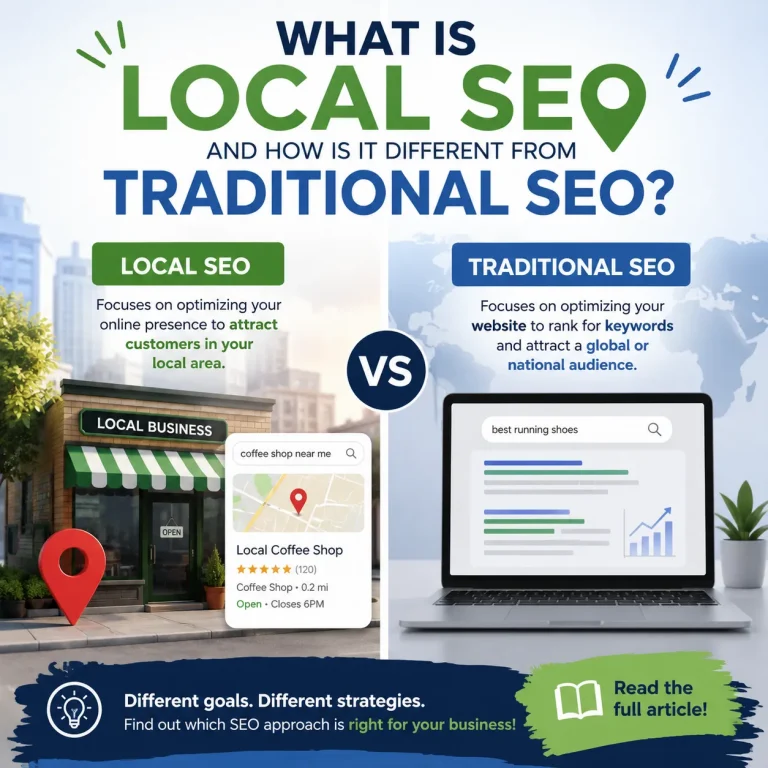
Traditional SEO generally focuses on improving visibility across broader searches and larger audiences. Local SEO focuses on helping businesses connect with customers searching within a specific area or market.
The challenge for businesses is knowing which keywords matter, where they rank, and how performance changes over time. This is where data-driven monitoring becomes essential.
By combining:
- Keyword Tracking
- Rank Monitoring
- Analytics Reports
- Easy Client Management
- Token Top-Ups and Promo Codes
organizations can gain the visibility needed to improve results and scale operations effectively.
The Difference Between Local SEO vs Traditional SEO
When discussing local SEO vs traditional SEO, the biggest difference is the target audience.
Traditional SEO often aims to reach broad audiences across multiple markets. Local SEO focuses on attracting customers within a particular region or service area.
However, both approaches rely on several important factors:
- Tracking relevant keywords
- Monitoring search performance
- Measuring ranking changes
- Reporting progress
- Managing campaigns efficiently
Without accurate performance data, businesses risk making decisions based on assumptions instead of evidence.
Data-backed decision-making transforms marketing from an expense into a measurable growth strategy.
The Power of Precision Keyword Tracking
Keyword Tracking allows businesses to monitor specific search terms and evaluate how those terms perform over time.
In the conversation surrounding local SEO vs traditional SEO, keywords play a central role because search behavior constantly changes.
Companies that monitor their keywords can:
- Identify emerging trends
- Understand customer interests
- Measure campaign effectiveness
- Adjust strategies quickly
- Improve decision-making
Instead of relying on intuition, organizations can analyze actual performance.
Adapting to Market Changes
Search trends evolve rapidly. Customer interests shift, competitors adjust their strategies, and market conditions change.
Keyword Tracking provides ongoing visibility into these movements.
Benefits include:
- Detecting rising opportunities
- Recognizing declining performance
- Evaluating marketing efforts
- Understanding seasonal patterns
- Supporting better business decisions
For sales professionals, this data helps identify market demand. For agency owners, it demonstrates ongoing activity and performance improvements.
Making Smarter Decisions
The debate around local SEO vs traditional SEO often centers on strategy. However, successful strategies depend on accurate information.
Keyword Tracking provides:
- Historical performance data
- Performance trends
- Strategic insights
- Competitive awareness
- Better forecasting
Organizations that understand which keywords matter can allocate resources more effectively.
Rank Monitoring: Turning Visibility Into Action
Rank Monitoring provides real-time visibility into where a business or client stands in search results.
This visibility is essential because rankings change frequently.
Businesses benefit from:
- Immediate performance awareness
- Faster decision-making
- Better accountability
- Ongoing optimization opportunities
Rather than waiting months to evaluate results, companies can monitor changes as they happen.
Why Rankings Matter
The discussion of local SEO vs traditional SEO often focuses on audience reach, but ranking visibility remains critical in both approaches.
Strong rankings can lead to:
- Greater visibility
- Increased traffic opportunities
- Higher brand awareness
- Improved credibility
- Better business outcomes
Rank Monitoring removes uncertainty.
Businesses no longer have to wonder whether their efforts are working. Instead, they can rely on measurable data.
Building Confidence Through Data
Sales professionals need evidence.
Agency owners need accountability.
Business operators need clarity.
Rank Monitoring provides all three.
By tracking performance consistently, organizations gain confidence in their decisions and can communicate results more effectively.
Using Analytics Reports to Prove Value
Analytics Reports transform performance information into meaningful business intelligence.
Data alone is not enough. Businesses need clear reports that explain what the numbers mean.
Professional reporting helps organizations:
- Visualize progress
- Demonstrate growth
- Show trends over time
- Communicate results
- Support decision-making
This is especially valuable when discussing local SEO vs traditional SEO because performance metrics must be easy to understand.
Improving Client Retention
Agency owners often struggle to demonstrate value.
Clients want answers to questions such as:
- Are rankings improving?
- Are keywords performing better?
- Is progress being made?
- Are goals being achieved?
Analytics Reports provide those answers.
Visual reporting creates transparency and builds trust between agencies and clients.
Supporting Sales Conversations
Sales professionals can use reports to:
- Present measurable outcomes
- Explain performance trends
- Identify opportunities
- Strengthen proposals
- Improve client confidence
When stakeholders see clear evidence of progress, decision-making becomes easier.
Measuring Return on Investment
One of the biggest challenges in marketing is proving return on investment.
Analytics Reports solve this challenge by connecting performance data to business objectives.
Benefits include:
- Greater accountability
- Improved transparency
- Better communication
- Stronger retention
- More informed decisions
Organizations that consistently measure performance are often better positioned for long-term growth.
Scalable Client Management
As businesses expand, managing multiple accounts can become difficult.
Easy Client Management simplifies this process by providing a streamlined dashboard that organizes information in one place.
This approach helps businesses avoid administrative overload.
Centralized Visibility
A unified dashboard allows teams to:
- Monitor multiple accounts
- Access performance data quickly
- Organize reporting
- Manage workflows
- Improve efficiency
For agencies handling numerous clients, centralized management saves time and reduces complexity.
Supporting Business Expansion
Growth often introduces operational challenges.
Without effective systems, teams can become overwhelmed.
Easy Client Management supports scalability by:
- Reducing manual processes
- Improving organization
- Increasing productivity
- Simplifying account oversight
- Supporting team collaboration
As discussions around local SEO vs traditional SEO continue, operational efficiency becomes increasingly important.
Businesses need systems that scale alongside growth.
Better Client Experiences
Clients expect transparency and responsiveness.
Streamlined management allows businesses to:
- Deliver information faster
- Respond more effectively
- Maintain consistency
- Improve communication
- Strengthen relationships
Efficient management contributes directly to client satisfaction and retention.
Why Data Wins in Local SEO vs Traditional SEO
The conversation about local SEO vs traditional SEO ultimately comes down to visibility, measurement, and decision-making.
Successful businesses rely on:
- Accurate Keyword Tracking
- Real-time Rank Monitoring
- Clear Analytics Reports
- Efficient Client Management
- Flexible Token Top-Ups and Promo Codes
Together, these capabilities provide clarity.
Instead of making assumptions, organizations gain measurable insights.
Instead of guessing, they make informed decisions.
Instead of struggling to scale, they build efficient systems.
Key Takeaways
Keyword Tracking
- Monitors important search terms.
- Identifies trends and opportunities.
- Supports strategic decisions.
Rank Monitoring
- Provides real-time visibility.
- Tracks performance changes.
- Improves accountability.
Analytics Reports
- Demonstrate progress.
- Visualize performance.
- Support client retention.
Easy Client Management
- Centralizes operations.
- Simplifies workflows.
- Enables scalability.
Conclusion: Turning Data Into Business Growth
Understanding local SEO vs traditional SEO is essential for modern businesses, sales professionals, and agency owners.
The most successful organizations rely on accurate information, measurable performance, and scalable systems.
Keyword Tracking provides valuable insights into changing search behavior.
Rank Monitoring delivers real-time visibility into performance.
Analytics Reports prove value and strengthen relationships.
Easy Client Management supports growth without administrative overwhelm.
Token Top-Ups and Promo Codes provide the flexibility needed to scale confidently.
When businesses have access to clear data and efficient management tools, they gain the confidence to make better decisions and achieve stronger results.
Success begins with clarity.
Businesses that want measurable performance, simplified management, and scalable growth can benefit from a platform built around visibility and efficiency.
With easy onboarding, a flexible token system, and convenient Token Top-Ups, getting started takes only moments.
Whether managing a single business or multiple clients, the ability to monitor rankings, track keywords, generate reports, and manage accounts from one place creates a strong foundation for long-term success.
Get started in seconds, scale at your own pace, and use flexible token management to support your growth journey.