

How to Optimize a Website for Local Search Step by Step
In the current digital economy, visibility is the primary driver of revenue. However, for businesses that rely on a physical presence or service within a specific area, global visibility is not the same as competitive success. When a potential customer needs a service immediately, they type a query that includes their current location. If you do not appear in these results, you are invisible to your most valuable audience. Effective local search optimization is not just about being found; it is about being found by the right people, at the right time, in the right place.
Many business owners attempt to optimize for generic terms like “best services” or “top products.” While these terms have high volume, they lack proximity. Proximity is the defining factor of local search optimization. Without prioritizing location data, your website may fail to connect with the users who are actually ready to purchase. You are essentially broadcasting to the world when you should be whispering directly into your local customer’s ear.
The process of mastering this discipline requires a structured approach. It involves updating your on-page content, verifying your technical signals, and ensuring your business information is consistent across the web. By following a step-by-step framework, you can transform your digital footprint into a reliable source of local leads. The following guide outlines the critical steps required to execute a robust local search optimization strategy and drive tangible business growth.
Understanding the Core Goals of Local Search Optimization
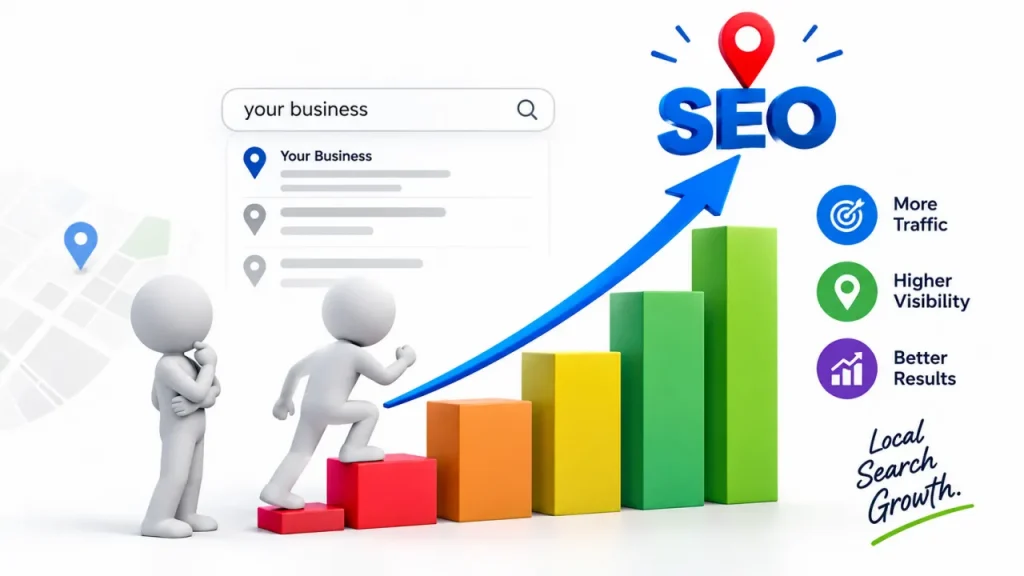
Before you begin editing files or adjusting settings, you must understand the objective of local search optimization. Unlike national SEO, which aims to capture broad intent, local SEO aims to capture intent combined with location. Search engines prioritize results that are geographically relevant to the searcher. Therefore, your primary goal is to signal to the search engine that you are the most relevant option within a specific radius.
To achieve high rankings in local search optimization, you must address three main factors often cited as pillars of success: Relevance, Distance, and Popularity. You need to be relevant to the search query. You need to be geographically close to the searcher. You need to be popular in the eyes of the algorithm through signal accumulation. Setting these goals clearly helps you measure your progress.
Key Objectives:
- Improve visibility for location-specific search terms.
- Drive targeted foot traffic and phone calls.
- Increase conversion rates from search results to contacts.
Understanding these metrics is the first stage of local search optimization. It shifts your mindset from “getting traffic” to “getting local customers.” These customers are valuable because they are likely to convert, whereas global traffic is typically more expensive and harder to close deals with.
Essential On-Page Strategies for Local Search Optimization
Your website content is the primary place where you communicate with both users and search engines. To start local search optimization, you must ensure that your on-page elements explicitly mention your service area. This is not just about stuffing keywords; it is about natural integration of location data into your core structure.
Start with your Title Tags and Meta Descriptions. These are the first lines of text a user sees in search results. You should include your primary location name (e.g., City, Neighborhood, or State) in the first 60 characters. If you offer services in multiple areas, create separate landing pages for each location. For example, do not use a generic “Services” page; use a page titled “Pest Control in Austin.” This targeted approach signals strong relevance for local search optimization.
In your main content, use headers to break down your offerings by location. Use H1, H2, and H3 tags to organize information hierarchically. If you write blog posts, create content that answers local questions. For instance, “Maintenance Tips for Winter in Chicago” performs well as a long-tail search query. It attracts users specifically looking for help within your defined area.
On-Page Checklist:
- Include NAP (Name, Address, Phone) in footer and header.
- Create location-specific title tags.
- Write blog content about local events or services.
Consistent implementation of these elements drives better results for local search optimization. It tells search engines exactly where you are and who you serve, reducing the confusion that often leads to lower rankings.
Technical Foundations for Effective Local Search Optimization
A website that ranks well technically ranks well locally. Speed and mobile responsiveness are crucial components of effective local search optimization. Most local searches are performed on mobile devices. A user searching for a plumber or a café is often on the go. If your site takes too long to load or is difficult to navigate on a phone, they will leave quickly. High bounce rates signal to search engines that the experience is poor, which negatively impacts local search optimization rankings.
You should also focus on structured data. specifically Local Business Schema markup. This code helps search engine bots understand your business information better than plain text alone. Your address, business hours, and phone number must be accurate within this code. If your website shows different hours than your Google Business Profile, it creates confusion. Search engines prefer when all data points align for a successful local search optimization effort.
Additionally, ensure that your domain name or subdirectory reflects your location if possible. A url like yoursite.com/yourtown is easier for crawlers to associate with your location than yoursite.com alone. These technical tweaks signal trust and authority to the search engine, which supports the goals of local search optimization.
Citation and Presence Consistency
Beyond the website itself, the wider web plays a role in local search optimization. Your business citations are mentions of your name, address, and phone number on other websites. Consistency is key here. If you list your phone number with a hyphen in one directory and without it in another, search engines may view your data as unreliable.
You must audit your online presence for these inconsistencies. Look for major local directories and ensure they match your website data exactly. Many tools can automatically scan for these discrepancies. By ensuring your presence is consistent, you build a foundation of trust that supports local search optimization. Without this consistency, the algorithms may struggle to verify your business location, reducing your chances of appearing in the map pack.
Leveraging Reviews as Trust Signals
Customer reviews provide social proof and are a strong signal for local search optimization. A high volume of positive reviews indicates that your business is performing well in the community. Search engines use the number of reviews and the rating score to determine the popularity of a business within a local area.
To leverage this strategy for local search optimization, you must actively encourage your satisfied clients to leave feedback. You do not need to micromanage reviews, but you should ask them. A simple follow-up email requesting a review can boost your standing. When users see positive ratings, they are more likely to click on your website link. This higher click-through rate further signals relevance to the search engine.
Review Best Practices:
- Ask for feedback immediately after service.
- Respond to both positive and negative reviews.
- Encourage reviews in relevant detail.
These actions validate your local search optimization efforts. They prove to your audience and the algorithm that you are active and valued.
Measuring the Success of Local Search Optimization
To continue improving, you must measure your performance. Local search optimization is an iterative process, not a one-time setup. You need to track specific metrics that indicate local performance. General traffic metrics often fail to tell the full story. You need data that shows you are capturing intent specific to your region.
Track rankings for local keywords. If you rank for “Chicago services,” that is one metric. If you rank for “services in [Neighborhood],” that is another. Use analytics tools that allow you to filter traffic by location. You want to see growth in visits from your specific service radius. Analyze where these visits come from and where they are going.
This data helps you refine your strategy. If you see a drop in traffic, investigate if it is technical, content-related, or due to a citation change. Regular monitoring ensures your local search optimization stays effective over time.
Conclusion: Claiming Your Market Position
Optimizing your website for the local market requires time, effort, and attention to detail. It is a holistic strategy that combines content, technical structure, and reputation management. By prioritizing local search optimization, you ensure that your business is visible to the people who are most likely to become your customers.
The steps outlined above provide a clear roadmap for improvement. You can start by auditing your on-page elements, then move to technical improvements, and finally focus on citations and reviews. Consistent application of these methods will lead to higher rankings and increased revenue.
Ready to Transform Your Local Visibility?
You do not have to guess how to optimize your local presence. You now have the knowledge to execute a powerful local search optimization strategy. Start today to secure your market position and drive real business growth. Focus on quality, consistency, and data to ensure your success.
Take charge of your growth today and build a website that works for you.