

Introduction
This creates a challenge for companies that rely on local search visibility to attract customers. A business might rank prominently for its main industry keywords and assume it is reaching most of its potential audience. However, customers rarely follow a single, predictable search pattern. Their language, urgency, experience, and purchasing intentions influence the terms they use, often dividing demand across numerous related searches.
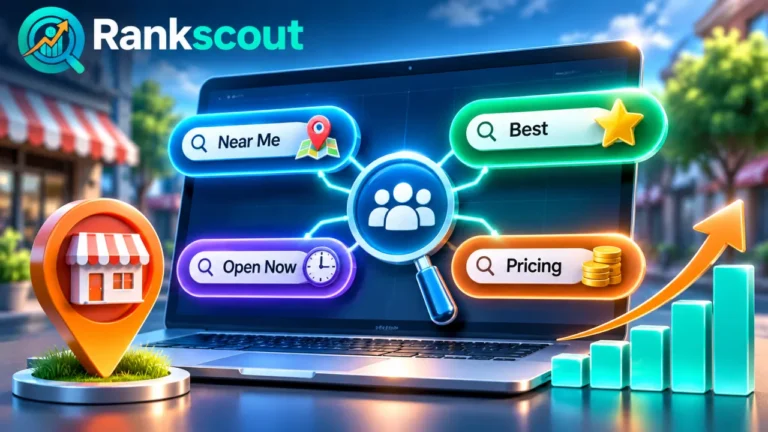
This phenomenon can be understood through local search intent fragmentation, a concept describing how customer demand for related services becomes distributed across different search phrases, questions, and purchasing situations. Rather than appearing as one clearly defined keyword opportunity, demand is divided into smaller groups that reflect different customer needs.
For business owners and SEO professionals, understanding local search intent fragmentation offers a more complete perspective on local SEO performance. It explains why strong rankings for broad keywords do not always produce comprehensive market visibility and why businesses may overlook valuable customers even when their websites appear to perform well.
Recognizing these differences allows companies to develop more relevant website content, identify overlooked search opportunities, and connect with customers throughout the decision-making process. The objective is not to target every possible keyword variation, but to understand the different intentions behind searches and ensure that important customer needs are adequately represented.
Understanding Local Search Intent Fragmentation
Local search intent fragmentation occurs when customers seeking similar services express their needs through different types of searches. These variations may reflect differences in urgency, familiarity with the service, geographic preferences, budget considerations, or the stage of the purchasing journey.
Consider a company offering air conditioning repairs. One customer might search for “AC repair near me,” while another enters “air conditioner blowing warm air.” A third person may search for “emergency HVAC technician,” and someone else might investigate the cost of replacing a faulty cooling system.
Although these searches relate to the same general industry, they communicate different needs. The first customer is looking directly for a service provider, the second is describing a problem, the third may require immediate assistance, and the fourth is comparing possible solutions.
A business that focuses entirely on broad service keywords may reach the first customer while missing opportunities to connect with the others.
This fragmentation becomes more significant in industries where customers have different levels of technical knowledge. Professionals may describe a service using industry terminology, while customers often search using everyday language. If a website relies heavily on specialist terms without explaining the problems those services solve, its content may fail to reflect the language potential customers actually use.
Local search intent fragmentation is not an official search engine ranking factor or a standardized SEO measurement. It is a practical framework for understanding how search demand is distributed across different customer intentions.
The value of this framework lies in recognizing that keyword coverage and customer coverage are not always the same thing. A business may rank for many variations of one phrase while remaining invisible to customers who describe their needs differently.
Why Local Search Intent Fragmentation Creates Hidden Visibility Gaps
One of the biggest challenges created by local search intent fragmentation is that missing opportunities are not always obvious in standard ranking reports. A business may see strong positions for its selected keywords without realizing that those keywords represent only a portion of the ways customers search for its services.
A plumbing company, for example, might monitor searches related to local plumbers and plumbing contractors. These terms can be valuable, but they may not reflect the full range of customer problems the company handles. People experiencing low water pressure, leaking pipes, blocked drains, or faulty water heaters may begin their searches by describing those issues rather than looking for a plumber directly.
If the company’s website does not provide useful information about these problems, it may struggle to appear for relevant searches despite offering the services customers need.
The problem can also occur when businesses target several keywords that express nearly identical intentions. A company may rank for multiple variations of “roof repair near me” while overlooking searches related to storm damage, roof inspections, or specific roofing materials. Its keyword count appears healthy, but its coverage of distinct customer needs remains limited.
This creates a difference between visible performance and actual market opportunity. Ranking improvements can be genuine without representing the full potential of the business’s services.
Identifying hidden gaps requires examining customer intent rather than simply adding more keywords to a tracking list. Businesses should consider the problems customers face, the questions they ask, and the situations that lead them to seek professional assistance.
When these intentions are compared with existing website content and search visibility, overlooked opportunities become easier to recognize.
The Relationship Between Customer Language and Local Search Visibility
Customers do not always understand the professional terminology associated with the services they need. Their searches often reflect personal experiences, symptoms, or desired outcomes rather than formal service descriptions.
A customer looking for electrical assistance may search for “lights flickering in house” instead of “residential electrical fault diagnosis.” Someone experiencing a drainage problem may describe a recurring smell or slow water flow rather than searching for a specialist drainage inspection.
These differences matter because website content must communicate with the audience it intends to attract.
Businesses sometimes build their online presence around the language they use internally. Service pages may contain technically accurate descriptions but fail to explain what those services mean for customers who are unfamiliar with the industry.
This can create a gap between professional expertise and customer understanding.
Local search intent fragmentation highlights the importance of using clear, accessible language that connects technical services with recognizable customer problems.
A useful service page can explain the professional service while also describing the situations in which someone might need it. Supporting articles can answer common questions and help customers understand their options.
However, businesses should avoid creating separate pages for every minor wording variation. Search engines can interpret related phrases and may present similar results for searches with comparable intent.
The objective is to address meaningful differences in customer needs, not simply reproduce the same information under multiple titles.
By understanding the language customers naturally use, businesses can make their websites more useful and improve the connection between their services and relevant searches.
How Purchasing Readiness Changes Local Search Intent
Not every person searching for a local service is ready to make a purchase. Some customers need immediate assistance, while others are comparing providers, researching prices, or deciding whether professional help is necessary.
These differences influence both search behavior and the information customers expect to find.
A homeowner searching for “emergency boiler repair” may want a phone number and confirmation that assistance is available. Someone searching for “signs a boiler needs replacing” may be evaluating a future purchase. Both searches can be relevant to a heating company, but they represent different stages of the customer journey.
Local search intent fragmentation becomes more complex when businesses assume that every search should lead directly to an inquiry.
Informational searches can introduce customers to a business before they are ready to buy. Clear explanations and practical advice may help establish familiarity, making the company a potential option when the customer eventually needs professional assistance.
Commercial searches require a different emphasis. Customers comparing providers often want clear service information, geographic coverage, qualifications, and practical details that help them make a decision.
Urgent searches place greater importance on convenience and speed. Visitors may need to understand immediately whether the business can solve their problem and how to request assistance.
A strong local SEO strategy recognizes these differences and provides appropriate information for each stage.
The goal is not to force every visitor toward the same action. It is to make the next step clear and relevant to the customer’s situation.
Geographic Differences in Local Search Intent Fragmentation
Customer search behavior can vary between locations, even when people are looking for similar services. Differences in housing, local industries, climate, transportation, and community characteristics can influence the problems customers experience and the language they use.
A property maintenance company serving several communities may encounter different patterns of demand across its service area. One neighborhood might contain older homes requiring specialist repairs, while another has newer developments where customers search for installation and maintenance services.
These differences can create distinct search opportunities within the same broader market.
Geographic language also varies. Some customers include town names in their searches, others refer to neighborhoods, and many rely on search engines to interpret their location automatically.
Businesses should therefore avoid assuming that one geographic keyword pattern represents every customer in their service area.
Local search intent fragmentation can help companies examine whether their website reflects the different needs of the communities they serve.
However, geographic targeting should remain accurate. Businesses should not create misleading content suggesting they operate in locations where they cannot reliably provide services.
Where location-specific information is useful, it should explain genuine service coverage and relevant practical details rather than simply repeat generic descriptions with different place names.
The most effective approach connects geographic relevance with real customer demand and the company’s operational capabilities.
Organizing Keywords Around Meaningful Customer Intent
A practical way to address local search intent fragmentation is to organize keywords into groups based on the needs they represent.
Instead of treating every search phrase as an independent opportunity, businesses can examine whether related terms express the same underlying intention.
For example, searches for “emergency electrician,” “urgent electrical repair,” and “electrician available today” may reflect similar customer priorities. Although the wording differs, each search suggests that the customer needs assistance quickly.
Other searches, such as “electrical inspection cost” or “rewiring an older house,” represent different questions and purchasing situations.
Grouping keywords in this way helps businesses understand the breadth of customer demand without becoming distracted by minor language variations.
It also makes performance easier to interpret. If a business performs well for general service searches but poorly for urgent repair queries, the gap becomes clearer when those categories are examined separately.
Keyword groups should reflect commercially meaningful distinctions. These may include service types, customer problems, urgency, purchasing readiness, and geographic requirements.
Businesses can then compare these groups with their existing website content to determine whether important needs are adequately addressed.
This process helps establish more focused priorities. Rather than attempting to target hundreds of unrelated phrases, companies can concentrate on the customer intentions most relevant to their services.
Over time, this creates a more coherent search strategy that connects keyword selection with actual business opportunities.
Creating Website Content That Connects Fragmented Search Demand
Website content plays a central role in connecting different customer intentions with the services a business provides.
When customers arrive through different types of searches, they need information that reflects their immediate questions. A broad service description may be useful for someone comparing providers but less helpful for a visitor trying to understand a specific problem.
Businesses can address this challenge by developing clear service pages supported by relevant informational content.
A primary service page should explain what the business offers, who the service is designed for, and how customers can take the next step. Supporting content can explore common problems, purchasing considerations, and questions that arise before customers decide to seek professional assistance.
For example, a window installation company might have a dedicated page explaining replacement window services. Related articles could address condensation problems, energy efficiency, or signs that existing windows need replacing.
These topics represent different search intentions while remaining connected to the company’s core offering.
Internal links can help visitors move between informational content and relevant services. Someone researching a problem can discover the professional solution without needing to begin another search.
Content should remain focused on usefulness rather than keyword repetition. Publishing numerous pages that provide almost identical answers can create confusion and weaken the overall website experience.
A coherent content structure allows businesses to address local search intent fragmentation while maintaining clarity and relevance.
Measuring Visibility Across Different Search Intent Groups
Traditional keyword reporting can show whether individual rankings are improving, but it may not reveal whether a business is becoming more visible across the full range of relevant customer intentions.
A more useful approach is to examine performance by intent category.
Businesses can establish groups representing immediate service needs, specific customer problems, research questions, and important commercial searches. Monitoring these categories over time helps identify where visibility is developing and where significant gaps remain.
For example, a company may discover that its informational content attracts considerable search exposure while its direct service pages struggle to appear prominently.
This pattern does not automatically indicate failure. Informational visibility can support awareness, but the company may need to strengthen its presence for searches associated with customers who are closer to making a purchase.
The opposite pattern can also occur. A business may perform strongly for direct service searches but have limited visibility among customers researching problems before choosing a provider.
Understanding these differences allows businesses to decide whether broader coverage would support their objectives.
Customer outcomes provide additional context. Inquiry quality, service requests, and sales conversations can help reveal whether search visibility is attracting people whose needs match the company’s offering.
However, ranking improvements should not automatically be treated as proof of increased revenue. Other marketing activities, seasonal changes, and customer preferences can influence commercial results.
The purpose of measurement is to connect search performance with a clearer understanding of customer demand.
Avoiding Overexpansion When Targeting Fragmented Search Intent
Recognizing that customers search in different ways can tempt businesses to create content for every possible keyword variation.
However, this approach can produce an unnecessarily large website filled with repetitive pages that offer little distinct value.
Local search intent fragmentation should encourage better organization, not uncontrolled content production.
Businesses should first determine whether a newly identified search represents a genuinely different customer need. If the intent closely matches an existing page, improving that page may be more useful than creating another.
Separate content becomes more appropriate when customers require substantially different information or when the service itself is distinct.
For example, a business may reasonably maintain separate pages for emergency repairs and planned installations because the services involve different expectations and purchasing decisions.
By contrast, creating multiple pages that differ only through minor changes in wording may provide little benefit.
Businesses should also consider commercial relevance. Not every question related to an industry represents a valuable opportunity. Some searches may attract audiences who have no realistic need for the company’s services.
A focused strategy prioritizes customer intentions that align with the business’s capabilities and long-term goals.
This helps maintain a website that is useful, manageable, and relevant rather than one designed simply to accumulate additional rankings.
Turning Local Search Intent Fragmentation Into a Growth Strategy
Understanding fragmented search demand becomes most valuable when it informs a repeatable improvement process.
Businesses can begin by reviewing their existing services and identifying the different situations that lead customers to seek them.
Customer conversations, common questions, and sales inquiries can help reveal how people describe their needs. These observations can then be compared with existing keyword priorities and website content.
The next step is to identify meaningful gaps. A company may have strong visibility for general service terms but limited coverage of urgent customer problems. Another may attract research-oriented visitors without appearing consistently for direct purchasing searches.
These gaps should be prioritized according to their potential business value.
A profitable service with limited search visibility may deserve attention before a low-value informational topic, even when the latter appears easier to target.
Once priorities are established, improvements should focus on providing clearer, more useful information.
This might involve strengthening a service page, creating content around an important customer problem, or improving the relationship between existing pages.
Performance should then be evaluated over time. Businesses can examine whether visibility is improving across the intended search categories and whether those changes correspond with relevant customer interest.
This process allows local SEO to develop alongside customer demand rather than remaining fixed around a small collection of familiar keywords.
Conclusion
Local search visibility is shaped by more than the number of keywords a business targets. Customers searching for the same service can express different needs, use different language, and approach purchasing decisions from different stages of the customer journey.
Local search intent fragmentation provides a useful framework for understanding these differences.
By examining how demand is distributed across service searches, customer problems, research questions, and geographic requirements, businesses can identify opportunities that traditional keyword lists may overlook.
The strongest strategies do not attempt to rank for every possible phrase. Instead, they organize searches around meaningful customer intentions and develop useful content that addresses those needs.
This approach helps businesses create a more complete search presence while maintaining relevance to their actual services and commercial objectives.
Ultimately, effective local SEO depends on understanding the people behind the searches. When businesses align their website content and keyword priorities with genuine customer needs, they can reach a wider range of relevant customers and build a stronger foundation for sustainable growth.