

Introduction
Improving your visibility in local search starts with understanding where your website stands today. Many businesses invest time in publishing content, optimizing pages, and updating their websites, but they rarely stop to evaluate whether those efforts are actually working.
That’s where a local SEO audit comes in.
A local SEO audit is a structured review of your website and online presence. It helps you identify strengths, uncover weaknesses, and prioritize improvements that can have the greatest impact on your visibility in local search results.
Rather than making random changes or chasing every new SEO trend, an audit provides a clear picture of what’s working and what needs attention. It helps you make informed decisions based on the current state of your website.
Whether you’re a small business owner, a marketing professional, or an agency supporting local businesses, performing regular local SEO audits can help you maintain a healthy website and build a stronger foundation for long-term growth.
In this guide, you’ll learn what a local SEO audit is, why it matters, and the key areas you should review to improve your local search performance.
What Is a Local SEO Audit?
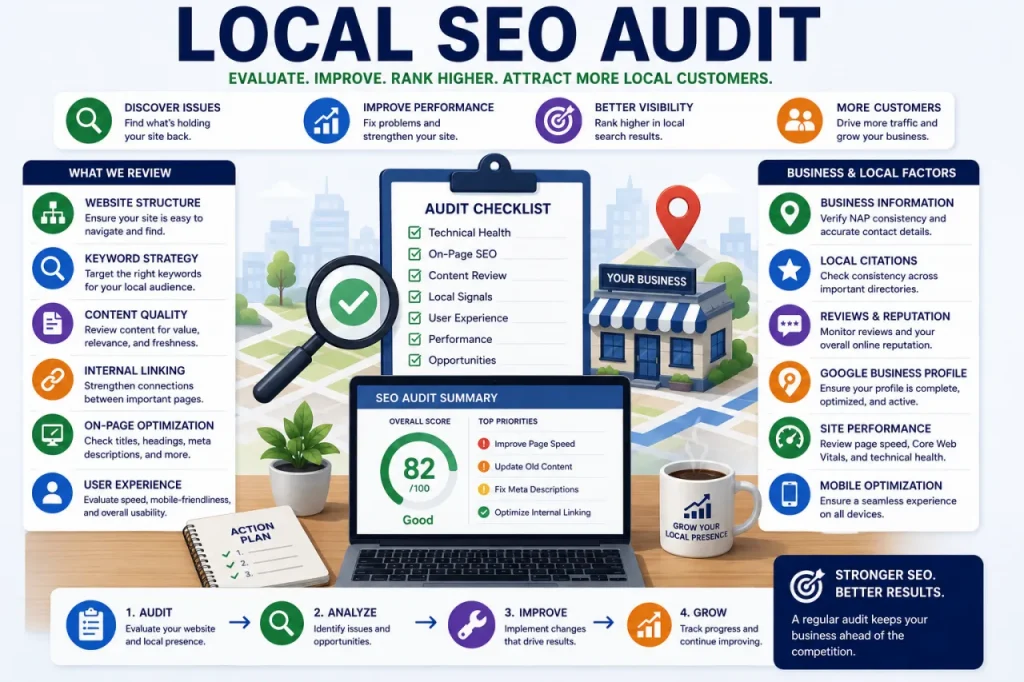
A local SEO audit is a comprehensive evaluation of the factors that influence your website’s visibility in local search.
Rather than focusing on one aspect of SEO, an audit reviews your entire online presence to identify opportunities for improvement.
A complete audit typically examines:
- Website structure
- Keyword targeting
- Content quality
- Internal linking
- Page optimization
- Business information consistency
- User experience
- Website performance
The objective is to understand how effectively your website serves both search engines and potential customers.
Why Local SEO Audits Matter
SEO is never truly finished.
Your competitors continue publishing new content, search behavior evolves, and your own website changes over time. Without regular reviews, it’s easy for outdated pages, technical issues, or missed opportunities to reduce your visibility.
A local SEO audit helps you:
- Discover hidden issues.
- Improve user experience.
- Strengthen your content.
- Find keyword opportunities.
- Prioritize future SEO work.
- Monitor long-term progress.
Regular audits ensure your SEO strategy stays aligned with your business goals.
Review Your Website Structure
A well-organized website makes it easier for visitors and search engines to find important information.
As part of your audit, review:
- Navigation menus
- Service pages
- Blog organization
- Contact information
- Internal page hierarchy
Ask yourself:
- Can visitors find key pages quickly?
- Are important services easy to access?
- Does the structure make sense?
Simple, logical organization improves usability and supports better indexing.
Evaluate Your Keyword Strategy
Every important page should have a clear purpose and target one primary topic.
During your audit:
- Identify each page’s primary keyword.
- Check for overlapping topics.
- Look for missing keyword opportunities.
- Ensure keywords match search intent.
Avoid creating multiple pages that compete for the same keyword, as this can dilute their effectiveness.
Assess Content Quality
Content should answer real customer questions and provide genuine value.
Review each page for:
- Accuracy
- Readability
- Depth
- Relevance
- Freshness
Ask yourself whether the page fully answers the user’s question or whether additional information would improve it.
If you find thin or outdated content, make updating it a priority.
Check On-Page Optimization
Good on-page SEO helps search engines understand your content while improving the user experience.
Review every important page for:
- Clear page titles
- One H1 heading
- Logical H2 and H3 headings
- Natural keyword placement
- Engaging meta descriptions
Optimization should enhance clarity rather than make content feel repetitive.
Review Internal Linking
Internal links connect related pages and guide visitors through your website.
Look for opportunities to:
- Link blog posts to service pages.
- Connect related educational resources.
- Strengthen topic clusters.
- Improve navigation.
Strong internal linking distributes authority across your website and helps users discover additional information.
Evaluate User Experience
Visitors should be able to use your website without frustration.
Review factors such as:
- Mobile responsiveness
- Page speed
- Readability
- Navigation
- Visual layout
A positive user experience encourages visitors to stay longer and interact with more of your content.
Check Business Information
Your business information should be accurate and consistent throughout your website.
Review:
- Business name
- Address
- Phone number
- Contact page
- Footer information
Consistency builds trust and helps reduce confusion for users.
Identify Content Gaps
One of the most valuable parts of an audit is discovering topics your website hasn’t covered yet.
Look for:
- Frequently asked questions
- Missing service pages
- Beginner guides
- Comparison articles
- Seasonal content
Expanding your content strategically helps strengthen topical authority.
Review Existing Content
Older articles can often be improved rather than replaced.
Consider updating:
- Statistics
- Examples
- Internal links
- Images
- Formatting
Refreshing content helps maintain its relevance and usefulness.
Prioritize Improvements
Not every issue needs to be fixed immediately.
Group your findings into priorities such as:
High Priority
- Broken pages
- Missing service content
- Outdated business information
Medium Priority
- Thin content
- Internal linking improvements
- Expanded FAQs
Low Priority
- Minor formatting changes
- Small readability improvements
- Cosmetic updates
A prioritized plan makes ongoing SEO more manageable.
Common Local SEO Audit Mistakes
Avoid these common pitfalls:
Auditing Too Infrequently
Review your website regularly rather than waiting for traffic to decline.
Focusing Only on Technical Issues
Content quality and user experience are just as important.
Ignoring Older Content
Existing pages often provide the quickest opportunities for improvement.
Trying to Fix Everything at Once
Prioritize high-impact changes first.
Forgetting User Intent
Always evaluate pages from the perspective of your customers.
Best Practices for Local SEO Audits
To get the most value from every audit:
- Review your website quarterly.
- Evaluate content objectively.
- Focus on user experience.
- Update outdated information.
- Improve internal linking.
- Expand valuable content.
- Track your progress over time.
Regular audits create a cycle of continuous improvement.
Frequently Asked Questions
How often should I perform a local SEO audit?
Most businesses benefit from a comprehensive audit every three to six months, with smaller reviews whenever significant website changes occur.
Do I need special tools to perform an audit?
Many aspects of a local SEO audit can be completed manually by reviewing your website, content, and user experience. Additional tools can provide deeper insights, but they’re not essential for getting started.
What's the biggest benefit of a local SEO audit?
An audit helps you identify issues that may be limiting your visibility, allowing you to focus your efforts on improvements that have the greatest potential impact.
Can a local SEO audit improve rankings?
An audit itself doesn’t change rankings, but implementing the improvements identified during the audit can strengthen your website and support better long-term search performance.
Conclusion
A local SEO audit is one of the most valuable exercises you can perform for your website. Rather than guessing which changes might improve your visibility, an audit gives you a structured framework for evaluating your current performance and identifying meaningful opportunities.
By reviewing your website structure, content, keyword targeting, internal links, and overall user experience, you’ll build a stronger foundation for sustainable local SEO success. Small improvements made consistently often lead to significant gains over time.
Remember that SEO is an ongoing process. Regular audits help ensure your website continues to meet the needs of both search engines and your audience as your business grows.
The first step toward stronger local search performance is understanding where your website stands today. Once you identify your biggest opportunities, you can make focused improvements that deliver lasting results.
If you’re ready to take a more strategic approach to your SEO efforts, start reviewing your website regularly, measure your progress, and continue refining your content over time. Consistent improvements today can lead to stronger visibility and more local customers tomorrow.