

Introduction
Every search begins with a purpose. Whether someone is looking for information, comparing businesses, or ready to make a purchase, their reason for searching influences the results they expect to see. This purpose is known as search intent, and understanding it is one of the most important aspects of creating a successful SEO strategy.
For businesses targeting customers in a specific city or region, local search intent plays an even bigger role. People searching locally are often looking for businesses they can contact, visit, or hire in the near future. They want relevant information quickly, and search engines work hard to deliver the most useful results possible.
If your website doesn’t align with what users expect to find, even excellent content can struggle to perform. On the other hand, when your pages match local search intent, you’re more likely to attract qualified visitors who are genuinely interested in your products or services.
In this guide, you’ll learn what local search intent is, why it matters, the different types of intent, and how you can create content that better serves your audience while improving your local SEO strategy.
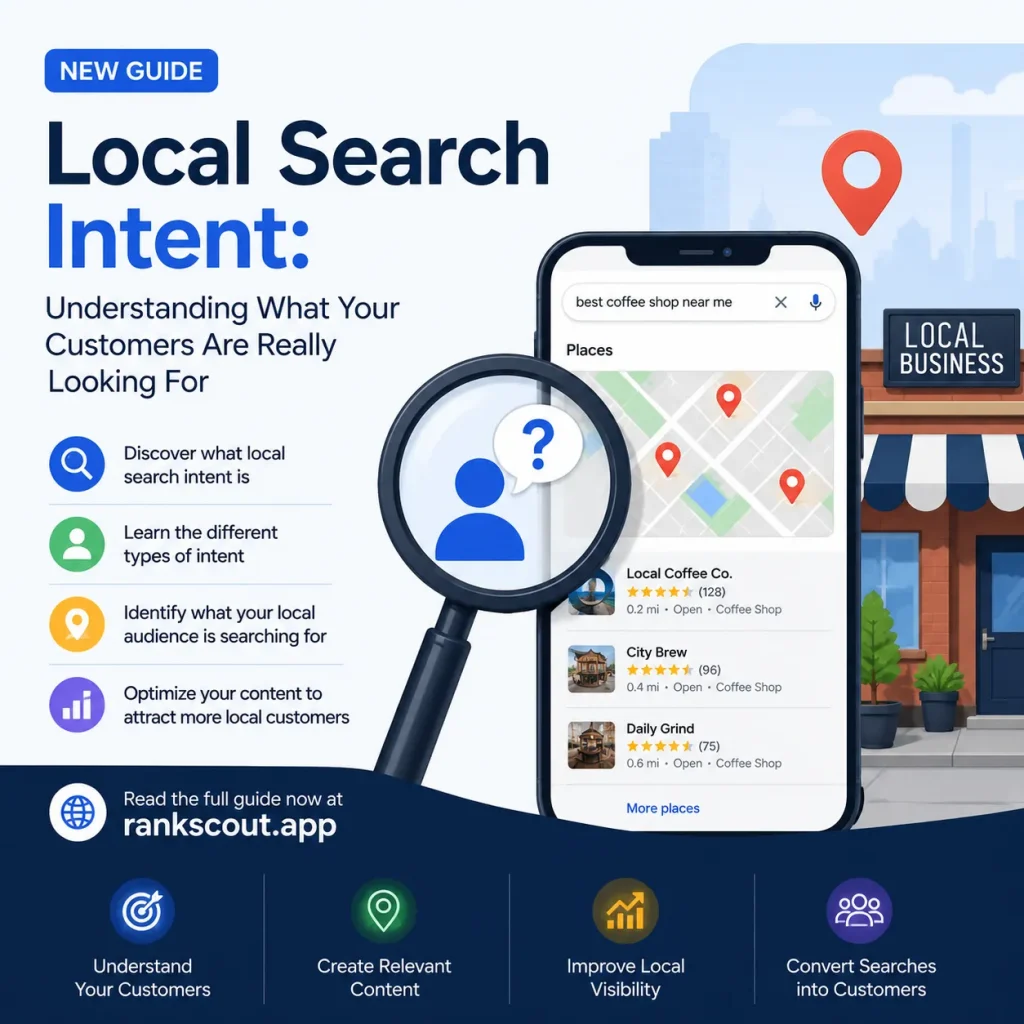
What Is Local Search Intent?
Local search intent refers to the reason behind a search that has a geographic focus. It describes what someone hopes to achieve when searching for businesses, services, or information within a particular location.
Some searches include an obvious location, such as:
- Electrician in Dallas
- Roofing contractor Phoenix
- Dentist in Portland
Others imply local intent without naming a city.
Examples include:
- Coffee shop near me
- Car mechanic nearby
- Emergency plumber
- Best pizza open now
Search engines use location data and the wording of the search to determine that the user wants nearby results.
Understanding this intent helps businesses create content that answers the right questions at the right stage of the customer journey.
Why Local Search Intent Matters
Many businesses focus only on keywords while overlooking the purpose behind those keywords.
However, two people using similar phrases may have completely different goals.
One person might want general information.
Another might be comparing businesses.
A third might be ready to make contact immediately.
Understanding local search intent allows you to:
- Create more relevant content.
- Improve user experience.
- Attract better-qualified visitors.
- Increase engagement.
- Improve long-term SEO performance.
Ultimately, matching intent is about helping users find exactly what they’re looking for.
The Four Main Types of Local Search Intent
Although every search is unique, most local searches fall into one of four categories:
Informational Intent
The user wants to learn something before making a decision.
Examples include:
- What is local SEO?
- How does roof replacement work?
- How much does kitchen remodeling cost?
- Why is HVAC maintenance important?
Content that performs well includes:
- Beginner guides
- Educational articles
- Frequently asked questions
- Cost guides
- Step-by-step tutorials
Informational content builds trust while introducing potential customers to your business.
Navigational Intent
The user already knows the business or website they want to find.
Examples include:
- Company name
- Business hours
- Contact information
- Directions
Your website should make this information easy to locate through clear navigation and organized pages.
Commercial Intent
The user is researching before making a purchase.
Examples include:
- Best roofing contractor near me
- Affordable landscaper
- Top-rated dentist
- Kitchen remodeling company reviews
Content for commercial intent should include:
- Service pages
- Comparison articles
- Buying guides
- Frequently asked questions
The goal is to help users evaluate their options.
Transactional Intent
The user is ready to take action.
Examples include:
- Book plumbing repair
- Schedule HVAC service
- Request roofing quote
- Contact family lawyer
Your pages should make it simple for visitors to move to the next step with clear calls to action and easy-to-find contact information.
How Search Engines Understand Local Search Intent
Search engines analyze many different signals to determine what users expect.
These include:
- Keywords
- Search history
- Device type
- User location
- Search trends
- Content relevance
The objective is always the same: deliver the most useful result for that particular search.
Businesses that create content matching user expectations are more likely to perform well over time.
Researching Local Search Intent
Keyword research should focus on more than search volume.
Ask yourself:
- Why would someone search this phrase?
- What information do they expect?
- Are they learning or buying?
- What would satisfy their search?
Understanding these questions helps you create pages with a clear purpose.
Creating Content That Matches Local Search Intent
Every page should serve a specific goal.
For informational searches:
- Publish educational blog posts.
- Answer common questions.
- Create beginner guides.
For commercial searches:
- Write detailed service pages.
- Compare solutions.
- Explain benefits.
For transactional searches:
- Provide clear contact options.
- Include persuasive calls to action.
- Make booking or inquiries simple.
When content aligns with intent, visitors are more likely to stay engaged.
Organize Your Website Around User Needs
A strong website structure helps users find relevant information quickly.
Organize content into logical categories such as:
- Services
- Service areas
- Blog
- About
- Contact
Within your blog, group related articles together through internal linking.
This improves navigation while strengthening your topical authority.
Use Internal Linking to Guide Visitors
Internal links help users continue their journey.
Examples include:
- Linking educational articles to service pages.
- Connecting beginner guides with advanced topics.
- Referencing related blog posts.
Good internal linking improves usability and helps search engines understand your content relationships.
Keep Your Content Helpful
Search engines reward content that genuinely helps users.
Avoid creating articles simply to target keywords.
Instead, ask:
- Does this answer the reader’s question?
- Is the information complete?
- Would I find this useful?
Helpful content naturally performs better over time.
Common Mistakes When Targeting Local Search Intent
Avoid these common problems.
Targeting Keywords Instead of Questions
Always consider why someone performs a search.
Mixing Different Types of Intent
Each page should focus on one primary purpose.
Publishing Thin Content
Provide enough detail to satisfy readers completely.
Ignoring Existing Content
Review and update older pages regularly.
Forgetting Internal Links
Guide visitors toward additional helpful resources.
Best Practices for Matching Local Search Intent
To improve your strategy:
- Understand your audience.
- Research customer questions.
- Create content for each stage of the buying journey.
- Organize your website clearly.
- Build topic clusters.
- Improve readability.
- Strengthen internal links.
- Update content regularly.
These habits help create a better experience for users while supporting stronger local SEO performance.
Frequently Asked Questions
What is local search intent?
Local search intent is the reason someone performs a location-based search, such as finding nearby businesses, comparing services, or learning about a local topic.
Why is search intent important for SEO?
Matching search intent helps search engines understand that your content satisfies user expectations, which can improve visibility and engagement.
How do I identify search intent?
Consider what someone hopes to achieve by performing the search. Are they learning, comparing, navigating to a business, or ready to take action?
Can one website target different types of intent?
Yes. The best websites create different pages for different stages of the customer journey rather than trying to satisfy every intent on a single page.
Conclusion
Understanding local search intent is one of the most effective ways to improve both your SEO strategy and the experience you provide to potential customers. Instead of focusing solely on keywords, think about the reasons people are searching and the type of information they expect to find.
By creating content that aligns with informational, commercial, navigational, and transactional intent, you make it easier for search engines to connect your pages with the right audience. At the same time, you build trust with visitors by giving them relevant, useful, and easy-to-understand information.
Remember that successful local SEO isn’t about attracting the most visitors—it’s about attracting the right visitors. When your content matches local search intent, you’re more likely to engage potential customers, encourage meaningful interactions, and build long-term organic visibility.
Understanding local search intent is only the beginning. The real results come from consistently tracking your performance, refining your content, and measuring what works over time.
If you’re ready to make smarter SEO decisions and monitor your progress with confidence, sign up for Rankscout today. With the right data at your fingertips, you can focus on creating better content, improving your search visibility, and reaching more local customers.