

Tracking local search performance is one of the clearest ways to understand whether a business is actually moving in the right direction. Local search can bring in highly qualified attention, but only if you can measure what is happening, spot changes early, and explain the results in a way that supports better decisions.
That is why sales professionals, agency owners, and business operators need more than a general sense of progress. They need a practical system to track local search performance, review the right search terms, monitor ranking movement, and turn raw data into action.
Rankscout is built for exactly that. With Keyword Tracking, Rank Monitoring, Analytics Reports, Easy Client Management, and Token Top-Ups and Promo Codes, it gives teams a simple way to stay organized, measure progress, and scale work without unnecessary complexity.
This guide explains how to track local search performance in a way that is clear, repeatable, and useful for real business growth.
Why Tracking Local Search Performance Matters
Local search performance is valuable because it connects visibility with intent. People searching locally are often ready to act. They are looking for a nearby service, a trusted provider, or a business they can contact soon. That makes local search one of the most practical places to focus attention.
But visibility alone is not enough. If you do not track local search performance, you may not know whether your work is creating momentum or just activity. Measuring performance gives you a clearer picture of what is working and what needs attention.
There are several reasons this matters:
- It shows whether the business is visible for important searches.
- It helps identify ranking changes before they become bigger issues.
- It creates a stronger basis for reporting and client communication.
- It supports better decisions about where to focus next.
For agencies, this improves retention and trust. For sales teams, it strengthens conversations around value. For business owners, it creates a more reliable way to manage growth. If you want to track local search performance effectively, you need a system that makes the data easy to use.
Start With Keyword Tracking
The first step in any practical workflow is to know what to measure. That is where Keyword Tracking becomes essential.
Focus on the most important search terms
Not every keyword matters equally. Some terms are broad and informational. Others are direct and tied to business goals. To track local search performance well, you need to pay attention to the terms most likely to influence leads, interest, or sales.
A focused keyword list may include:
- Core service terms
- Brand-related searches
- High-intent local phrases
- Keywords tied to common customer needs
The goal is not to monitor everything. The goal is to track the terms that matter most. That makes the data more useful and the workflow easier to manage.
Watch changes over time
Keyword Tracking is most helpful when it shows movement over time. A single data point can be useful, but a pattern tells the real story. Search behavior changes. Competition changes. Customer demand changes. If you track local search performance consistently, you can see those shifts more clearly.
That matters because a keyword that performs well today may need more support later. A term that is slowly improving may signal growing opportunity. A keyword that slips may show that attention needs to shift.
Turn keyword data into action
Tracking is only useful if it helps you decide what to do next. Keyword Tracking should help answer questions like:
- Which keywords are improving?
- Which terms are losing visibility?
- Which searches deserve more focus?
- What should be included in the next report?
This turns local search performance from a vague concept into a practical business process. The numbers are no longer just interesting. They are useful.
Key takeaway: Keyword Tracking gives you the foundation you need to track local search performance with clarity.
Use Rank Monitoring to Understand Current Position
Once the right search terms are being tracked, the next step is to understand where the business stands today. That is where Rank Monitoring helps.
See ranking position in real time
Rank Monitoring gives real-time visibility into where a business or client stands in search results. That matters because local search can shift quickly. A term may rise, fall, or remain flat without warning.
If you want to track local search performance accurately, you need current data. Rank Monitoring gives you that visibility so you are not relying on old assumptions or incomplete information.
Use movement to set priorities
Rank Monitoring is valuable because it helps you understand change, not just position. A keyword that rises may deserve more support. A term that has stalled may need a fresh approach. A term that drops may need a closer review.
This makes Rank Monitoring more than a snapshot. It becomes a decision-making tool. It helps teams decide what should be prioritized and where effort should go next.
Keep conversations grounded in current reality
One of the biggest problems in local search is using outdated information when talking about performance. Rank Monitoring helps reduce that problem by showing what is happening now.
For sales professionals, that means better conversations. For agency owners, it means clearer reporting. For business operators, it means a more accurate picture of what is happening in the market.
Key takeaway: Rank Monitoring helps you track local search performance by showing where the business stands right now.
Use Analytics Reports to Explain the Results
Tracking and monitoring are important, but they become much more valuable when the results are easy to understand. That is why Analytics Reports matter.
Turn data into a useful story
A good report should do more than list numbers. It should explain what the numbers mean. That is especially important when you are trying to track local search performance for clients, teams, or internal planning.
Analytics Reports help turn raw data into a clearer story about progress, visibility, and movement. That makes it easier to show what changed and why it matters.
Make client communication easier
For agency owners, reporting is one of the strongest ways to build trust. Clients want to know that work is being measured. They want to see progress in a format they can understand. They want reassurance that the strategy is moving in the right direction.
Analytics Reports help make that conversation more productive. They allow teams to show progress professionally and highlight the changes that matter most.
Support internal decisions
Analytics Reports are not only for clients. They are also useful for internal teams and business owners who need to make better decisions.
A strong report can help answer:
- What changed this month?
- Which keywords performed best?
- Where did visibility improve?
- What should be prioritized next?
That makes it easier to track local search performance in a way that actually supports business planning. The data becomes part of the decision process, not just a summary of what already happened.
Build confidence through clarity
Clear reporting reduces confusion. It gives teams a more reliable way to talk about growth and progress. That confidence matters because local search work often involves multiple moving parts, and clear reporting helps keep everyone aligned.
Key takeaway: Analytics Reports help you track local search performance by making the results easy to explain and use.
Use Easy Client Management to Stay Organized
As the number of accounts grows, organization becomes just as important as insight. That is where Easy Client Management makes a difference.
Keep multiple accounts in one place
A streamlined dashboard makes it easier to manage multiple business accounts or clients in one place. That is especially useful for agencies, but it is also valuable for businesses that support multiple locations or brands.
When everything is centralized, the workflow becomes easier to manage. Teams can stay organized without bouncing between several disconnected tools.
Reduce administrative strain
Growth should not create unnecessary administrative overload. Easy Client Management helps reduce the burden of manual account handling and repeated admin work.
That matters because the more time a team spends on organization, the less time it has for strategy and improvement. A cleaner system gives teams room to focus on what matters most.
Improve coordination and communication
A better-organized dashboard also supports better communication. Teams can move faster, find information more easily, and stay aligned around the same performance goals.
A scalable management system should help you:
- Stay organized across multiple accounts
- Review performance faster
- Reduce manual work
- Focus on higher-value tasks
For anyone trying to track local search performance across several clients or locations, that kind of organization is a major advantage.
Key takeaway: Easy Client Management helps local search work stay scalable and manageable.
A Simple Workflow to Track Local Search Performance
If you want a practical structure, here is a simple way to track local search performance using Rankscout:
1. Choose the right keywords
Start with the search terms most closely tied to the business goal.
2. Track those keywords consistently
Use Keyword Tracking to follow progress over time.
3. Monitor ranking position
Use Rank Monitoring to see where the business stands now.
4. Turn the data into reports
Use Analytics Reports to explain the changes clearly.
5. Keep accounts organized
Use Easy Client Management to stay efficient as the work grows.
This workflow keeps the process straightforward. It also gives teams a cleaner way to track local search performance without overcomplicating the work.
Conclusion: Tracking Local Search Performance Becomes Easier With the Right System
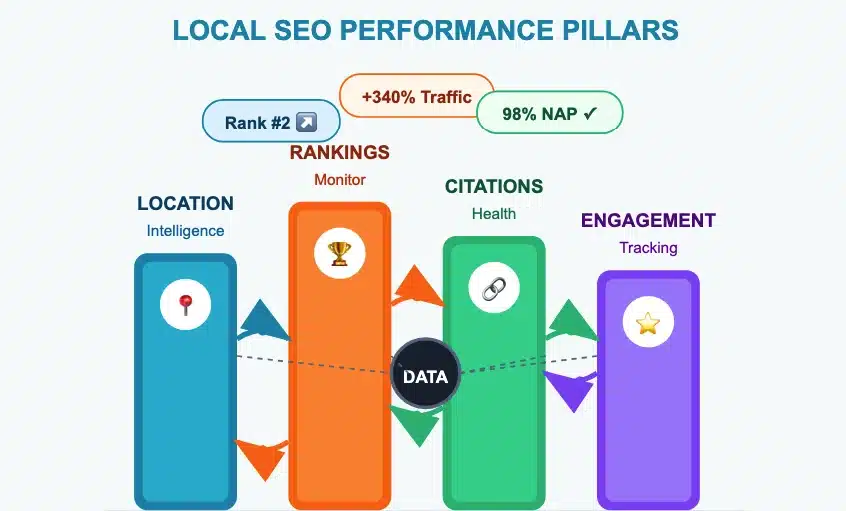
The best way to track local search performance is to combine measurement, reporting, organization, and flexibility into one practical process. Keyword Tracking shows which terms matter. Rank Monitoring shows where the business stands in real time. Analytics Reports help explain what the data means. Easy Client Management keeps the workflow organized. Token Top-Ups and Promo Codes make growth more flexible and manageable.
That combination creates clarity. It creates scalability. It creates a more reliable way to turn search data into business decisions.
For sales professionals, this means stronger conversations and clearer proof of value. For agency owners, this means better reporting and smoother operations. For business operators, this means a more practical path to growth.
Rankscout brings those pieces together in a straightforward way. It gives teams the structure they need to track progress, explain results, and scale with confidence.
Ready to track local search performance more effectively? Start with Rankscout, use Token Top-Ups to get moving quickly, and take advantage of the flexible token system as your needs grow. It is a simple way to stay organized, keep performance visible, and turn data into action.
Get started in seconds. Track the right keywords. Measure what matters.