

In today’s competitive digital marketplace, showing up in local search results is no longer optional. Whether you’re a small business owner, a growing franchise, or a marketing agency managing multiple clients, having an effective local search strategy can make the difference between consistent business growth and being overlooked by potential customers.
The challenge is that many businesses rely on assumptions rather than measurable data. They invest time and money into marketing without knowing which keywords drive visibility, whether rankings are improving, or how their performance changes over time.
A successful local search strategy isn’t built on guesswork. It’s built on accurate keyword tracking, reliable rank monitoring, detailed analytics, organized client management, and the flexibility to scale as your business grows.
That’s where Rankscout provides value. By focusing on the metrics that matter most, businesses and agencies can make informed decisions, demonstrate measurable progress, and confidently expand their local search efforts.
In this guide, you’ll learn what makes an effective local search strategy, why ongoing performance tracking matters, and how businesses can use data to continuously improve their visibility
The Foundation of a Successful Local Search Strategy
Every successful marketing campaign starts with a clear understanding of what success looks like.
An effective local search strategy isn’t simply about appearing in search results—it’s about consistently improving visibility for the search terms that matter most to your business.
Without measurable performance data, it’s impossible to know whether your efforts are producing meaningful results.
A strong strategy should focus on:
- Tracking important local keywords
- Monitoring ranking performance over time
- Using analytics to guide future decisions
- Managing campaigns efficiently
- Scaling operations without increasing complexity
Businesses that continuously measure these areas are far more likely to identify opportunities before competitors do.
Instead of reacting months later when performance drops, they can adapt quickly using real-world data.
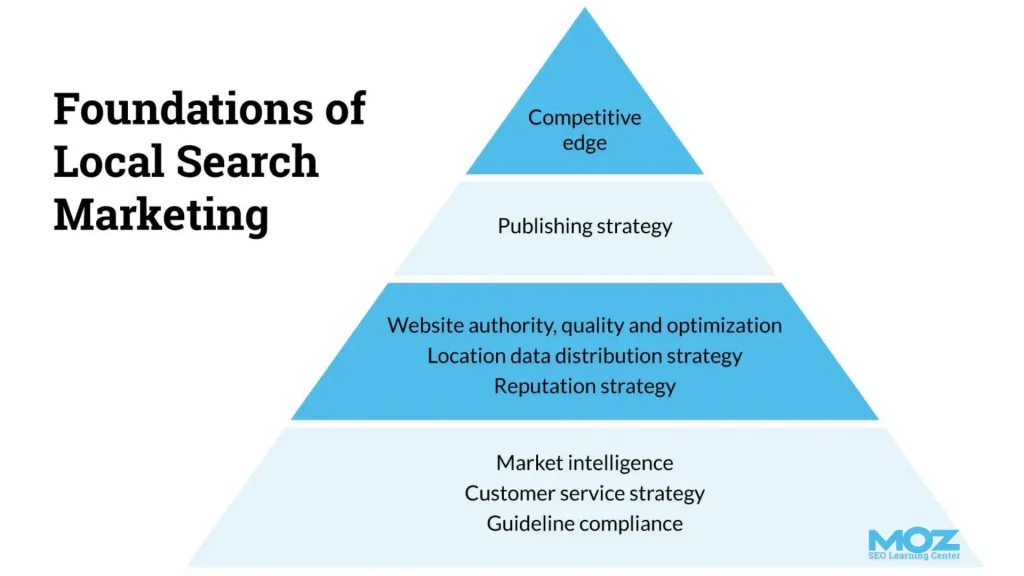
Why Keyword Tracking Is the Heart of Every Local Search Strategy
Every customer begins with a search.
The words people type into search engines reveal exactly what they’re looking for, making keyword tracking one of the most valuable components of any local search strategy.
Rather than assuming which searches are driving visibility, businesses should continuously monitor the keywords most relevant to their products and services.
Keyword tracking provides answers to questions such as:
- Which keywords are improving?
- Which keywords are declining?
- Which opportunities deserve additional attention?
- Which locations perform best?
Having this information allows businesses to prioritize marketing efforts where they’ll produce the greatest return.
Instead of making broad changes based on intuition, decisions become evidence-based.
Monitor Trends Instead of Taking Snapshots
Search performance constantly changes.
Competitors update websites.
Customer behavior evolves.
Seasonal demand shifts.
Search engines adjust ranking algorithms.
Looking at rankings once every few months rarely tells the full story.
Consistent keyword tracking allows businesses to observe long-term trends instead of isolated moments.
Over time, these trends reveal:
- Steady improvements
- Seasonal fluctuations
- Emerging opportunities
- Areas requiring attention
This historical perspective leads to smarter planning and better resource allocation.
Rank Monitoring Keeps Your Local Search Strategy Moving Forward
Tracking keywords is valuable.
Knowing exactly where those keywords rank is equally important.
Rank monitoring provides ongoing visibility into search performance, helping businesses understand whether their marketing efforts are producing measurable improvements.
Instead of wondering whether visibility is increasing, businesses can monitor ranking movements as they happen.
This allows faster decision-making whenever performance changes.
Why Continuous Rank Monitoring Matters
Search rankings rarely stay static.
Even highly competitive keywords fluctuate regularly.
Without ongoing monitoring, businesses often discover ranking declines only after traffic has already been affected.
Continuous rank monitoring helps organizations:
- Identify positive momentum
- Detect ranking drops early
- Measure campaign effectiveness
- Compare performance over time
- Stay informed about competitive positioning
Every ranking change represents useful information.
When tracked consistently, those changes help shape future marketing priorities.
A Data-Driven Local Search Strategy Beats Guesswork
Marketing decisions become significantly easier when they’re supported by reliable information.
One of the biggest mistakes businesses make is relying on opinions rather than measurable performance.
A data-driven local search strategy removes uncertainty.
Instead of asking:
“Is our marketing working?”
Businesses can ask:
“What do the numbers tell us?”
This shift creates more confident decision-making across every department.
Sales teams gain stronger talking points.
Marketing teams prioritize the right campaigns.
Business owners invest with greater confidence.
Using Analytics Reports to Improve Your Local Search Strategy
Collecting data is only useful if it’s easy to understand.
Professional analytics reports transform ranking information into meaningful business insights.
Rather than reviewing endless spreadsheets, businesses can quickly visualize progress over time.
Analytics reports help answer questions like:
- Are rankings improving?
- Which keywords are growing?
- Which campaigns are delivering results?
- How has visibility changed over the last month?
- What trends should we monitor next?
Having these answers readily available improves strategic planning.
Analytics Reports Help Agencies Demonstrate Value
For agencies and consultants, reporting isn’t simply about presenting numbers.
It’s about demonstrating results.
Clients want evidence that their investment is producing measurable outcomes.
Professional analytics reports make those conversations much easier.
Instead of relying on subjective updates, agencies can present clear performance trends supported by data.
Benefits include:
- Easier client communication
- Greater transparency
- Increased trust
- Better retention
- Stronger long-term relationships
When clients clearly see progress, they’re far more likely to continue investing in ongoing marketing efforts.
Better Reporting Supports Better Business Decisions
Business owners often need to make decisions quickly.
Accurate reporting provides the confidence to:
- Increase marketing investment
- Shift priorities
- Focus on high-performing keywords
- Evaluate campaign performance
- Set realistic growth goals
Instead of relying on assumptions, every decision becomes supported by measurable evidence.
Scaling Your Local Search Strategy Through Easy Client Management
Growth creates new challenges.
Managing one business account is relatively straightforward.
Managing dozens—or even hundreds—can quickly become overwhelming without proper organization.
Easy Client Management simplifies this process by allowing businesses and agencies to oversee multiple accounts from one centralized dashboard.
This reduces administrative complexity while improving operational efficiency.
Organization Creates Scalability
Many agencies spend unnecessary time switching between accounts, locating reports, or managing separate workflows.
A centralized dashboard streamlines daily operations.
With organized client management, businesses can:
- Access multiple client accounts in one place
- Stay organized as operations expand
- Reduce administrative workload
- Improve workflow efficiency
- Spend more time focusing on strategy
The result is a smoother experience for both agencies and their clients.
Better Client Management Improves Customer Experience
Efficient internal systems often lead to better customer service.
When account information is easy to access, businesses can respond faster, provide clearer updates, and deliver a more professional experience.
This creates stronger client relationships while reducing operational friction.
As businesses grow, organized management becomes increasingly valuable.
Flexibility Matters in Every Local Search Strategy
Growth rarely follows a perfectly predictable path.
Some months require additional resources.
Other periods may require more conservative spending.
Flexible account management allows businesses to scale according to current needs rather than fixed commitments.
This flexibility helps businesses remain agile while controlling costs.
Building a Long-Term Local Search Strategy
Success in local search isn’t achieved through one-time improvements.
It requires ongoing measurement, evaluation, and refinement.
The most successful businesses consistently:
- Track important keywords
- Monitor rankings regularly
- Review analytics reports
- Organize client management
- Scale efficiently as opportunities arise
These habits create continuous improvement instead of temporary gains.
Small, data-backed adjustments made consistently often produce significantly better long-term results than infrequent major changes.
Common Mistakes That Hurt a Local Search Strategy
Many businesses unintentionally limit their success by overlooking performance data.
Some common mistakes include:
Tracking Too Few Keywords
Businesses often monitor only a handful of search terms.
A broader keyword portfolio provides a more complete picture of visibility.
Ignoring Ranking Changes
Rankings naturally fluctuate.
Monitoring these movements helps identify opportunities before competitors capitalize on them.
Reviewing Reports Too Infrequently
Waiting several months between performance reviews delays important decisions.
Regular analytics reviews keep strategies aligned with current performance.
Disorganized Client Management
As agencies grow, poor organization quickly becomes a bottleneck.
Centralized management supports smoother operations and better client experiences.
Limiting Growth With Inflexible Budgets
Businesses should be able to scale when opportunities appear.
Flexible token top-ups and promo codes help remove unnecessary barriers to expansion.
Best Practices for Maintaining an Effective Local Search Strategy
Businesses that consistently improve their local visibility often follow several proven practices.
These include:
- Monitor keyword performance regularly.
- Review ranking trends rather than isolated changes.
- Use analytics reports to guide every major decision.
- Keep client accounts organized within one dashboard.
- Scale resources using flexible token top-ups.
- Take advantage of promo codes whenever available.
- Focus on long-term improvement instead of short-term fluctuations.
Consistency is often the biggest competitive advantage.
Businesses that regularly evaluate performance are better positioned to respond to changing market conditions.
Why Data-Driven Businesses Outperform the Competition
The difference between average-performing businesses and industry leaders often comes down to decision-making.
Successful organizations don’t rely on assumptions.
They rely on measurable performance.
When keyword tracking, rank monitoring, analytics reporting, client management, and flexible account scaling work together, businesses gain a complete picture of their local search performance.
This visibility reduces uncertainty, improves planning, and supports sustainable growth.
Rather than asking whether marketing efforts are working, businesses can confidently measure results and continuously optimize their strategy.
Conclusion
Building an effective local search strategy requires more than simply hoping your visibility improves over time.
It requires consistent keyword tracking, ongoing rank monitoring, clear analytics reporting, organized client management, and the flexibility to scale as your business grows.
When every decision is supported by reliable data, businesses can respond faster, identify new opportunities, and demonstrate measurable progress with confidence.
Whether you’re managing your own business or overseeing multiple client accounts, having the right tools makes growth significantly more predictable and manageable.
If you’re ready to replace guesswork with measurable performance, Rankscout provides everything you need to monitor rankings, track important keywords, generate professional analytics reports, manage multiple clients from one dashboard, and scale your account with ease.
Getting started takes only seconds, and the flexible token system lets you grow at your own pace. When you need additional capacity, simple Token Top-Ups make expansion quick and straightforward, while available Promo Codes help you maximize your budget.
Start building a smarter, data-driven local search strategy today with Rankscout and gain the clarity, flexibility, and performance insights needed to support long-term business growth.